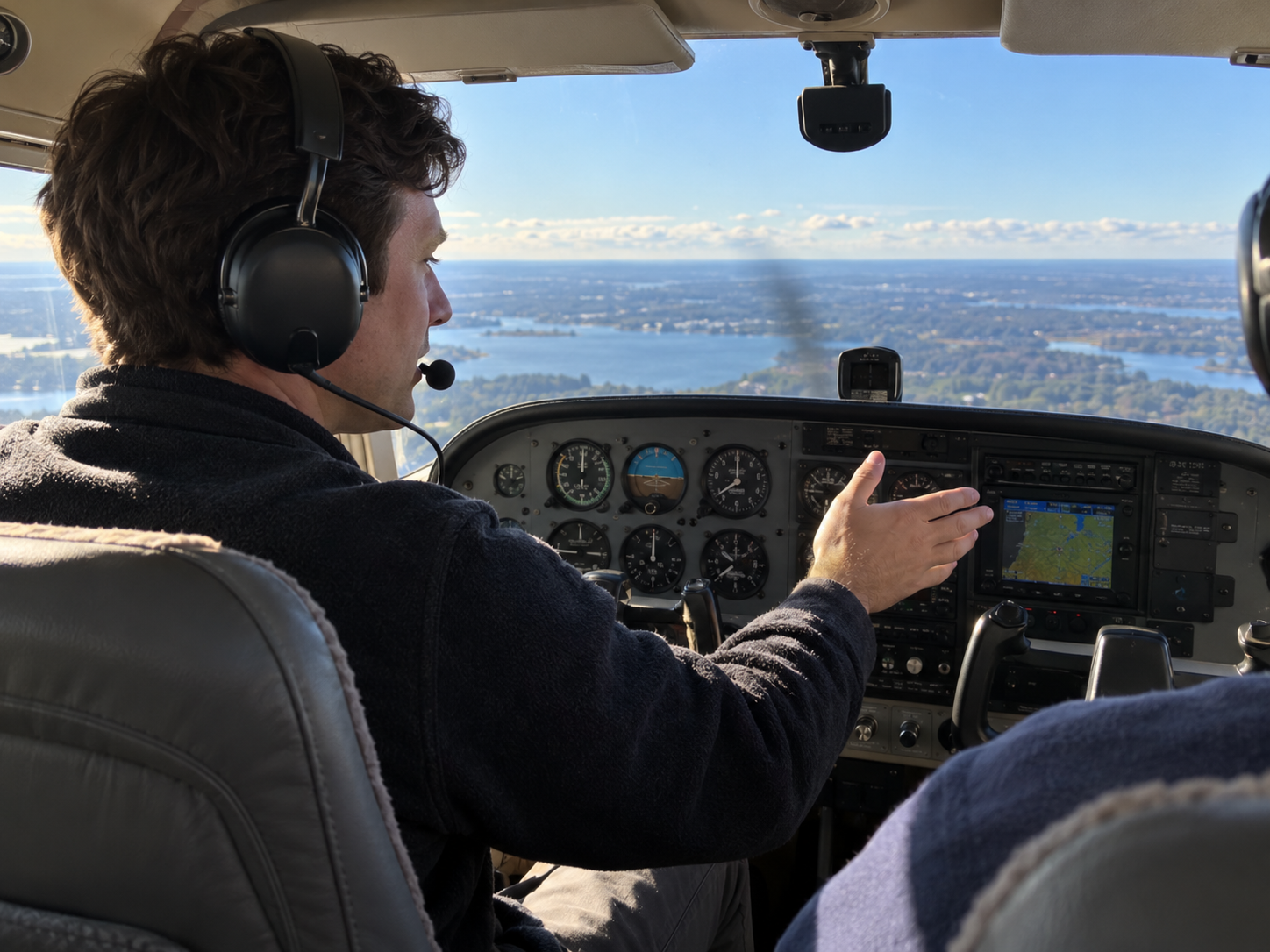
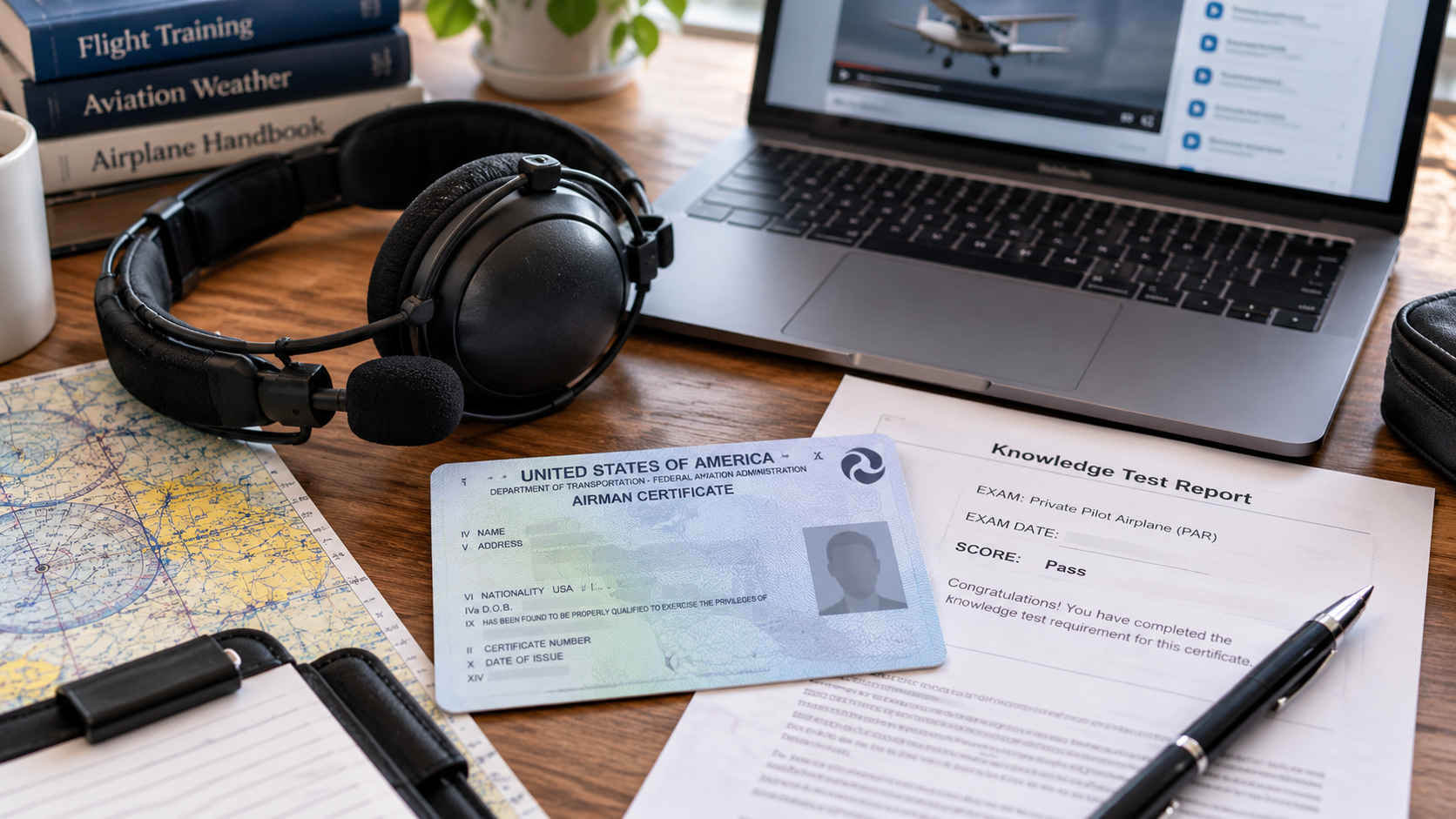
CFI oral exam guides are useful, and most applicants preparing for the CFI oral exam use one. The mistake isn't using a guide, it's treating the answers in it as scripts to memorize word for word instead of a starting point for actually understanding the material. A DPE can hear a recited answer from across the ramp.
They notice the difference immediately, and it's usually the difference between an applicant who handles follow-up questions smoothly and one who freezes the moment the conversation moves off-script. That difference shows up within the first few minutes of the oral, long before the harder questions even come up.
Why Memorized Answers Fall Apart
A written CFI oral exam guide gives you one clean version of an answer. A real DPE conversation rarely stays on that one version. They'll ask the same underlying concept from a different angle, embed it in a scenario, or follow up with "why" after you've already answered. An applicant who memorized the guide's exact phrasing often has nothing to fall back on once the question shifts even slightly, because they never built an actual mental model of the concept, just a script for one specific way of asking about it.
This is the single most common reason CFI oral exam applicants who "knew the material" still struggle in the oral: they knew an answer, not the underlying concept the answer was describing.
How to Use an Oral Exam Guide the Right Way
An oral exam guide is most useful as a checklist of topics and a starting explanation, not a script. After reading a guide's answer to a question, the actual studying happens when you close the book and explain the same concept in your own words, out loud, without looking. If you can't do that yet, you don't know the material well enough for the oral, regardless of how many times you've read the guide's version. Highlighting the parts of the guide's answer you can't yet restate from memory, then closing the loop by rewriting those specific points in your own words, is a better use of study time than rereading the whole guide cover to cover again.
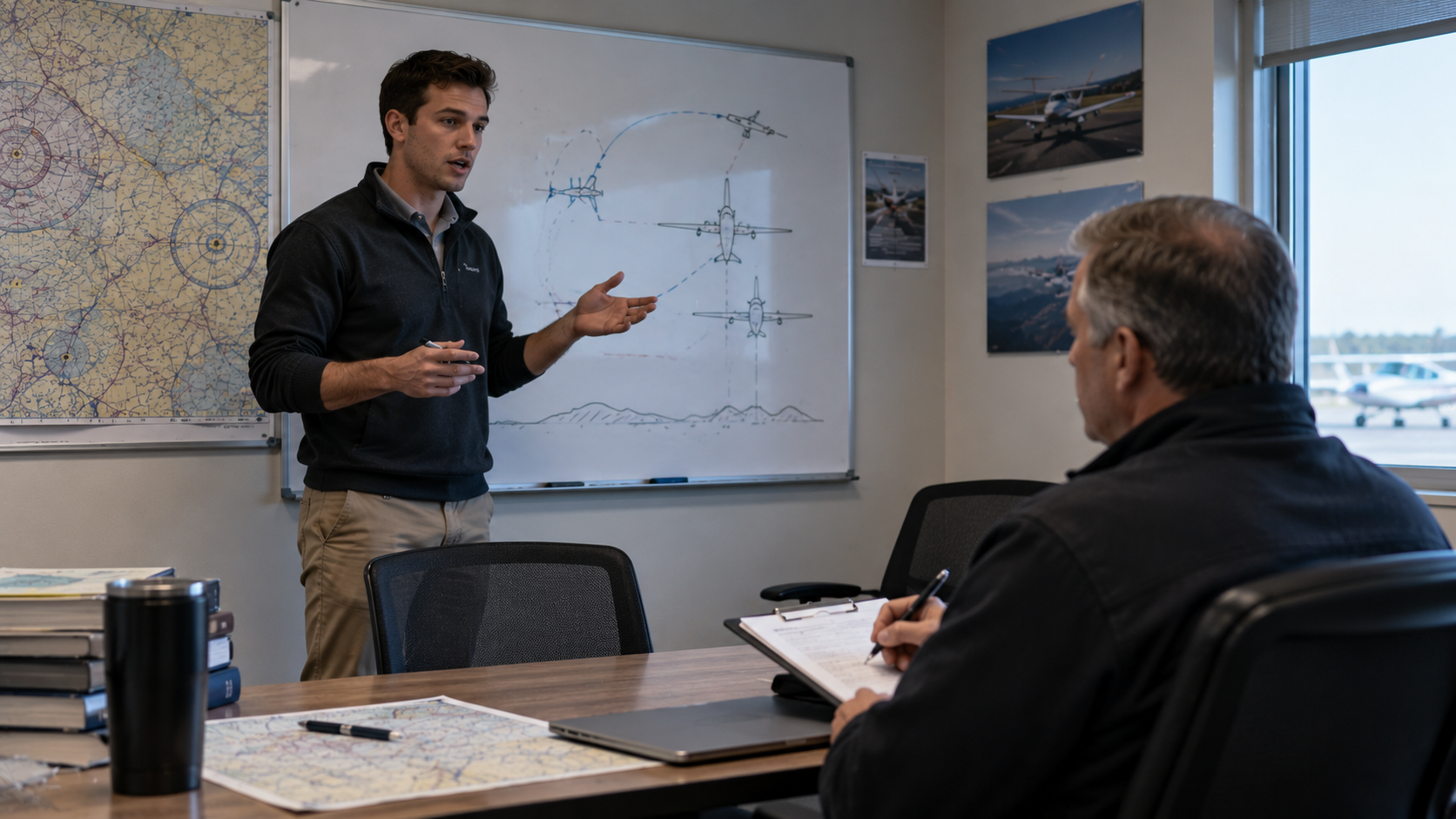
A useful test: pick a topic from the guide, explain it out loud as if teaching a That gap is worth writing down as you find it, since it tells you exactly which topics need another pass before the checkride, rather than leaving you to guess.nervous student pilot, then explain the same topic again as if answering a DPE's follow-up "why does that matter operationally?" If the second explanation is harder than the first, that's exactly the gap a memorized answer would have hidden until checkride day.
Why Scenario-Based Questions Are Becoming More Common
Examiners have increasingly shifted toward Applicants who only ever study isolated facts tend to answer the first half of a scenario question correctly and then stall when asked what they'd actually do next, because the guide they studied from never asked them to connect the two.scenario-based oral questioning, embedding a knowledge question inside a realistic flight situation rather than asking it in isolation. Instead of "what's the fuel requirement for a VFR flight at night," a scenario-based version might describe a specific planned flight and ask you to work through whether it meets requirements, what you'd do if conditions changed, and how you'd brief a passenger on the plan. This format rewards applicants who understand the underlying regulation well enough to apply it to a new situation, and it's noticeably harder to get through on memorized answers alone, which is exactly the point.
Practicing for the Conversation, Not the Question List
Real oral exams are conversations, and DPEs are trained to follow a thread rather than march through a fixed list. Preparing with a study partner who can ask genuine follow-up questions, "okay, but what if the weather were different," "what if this happened during that maneuver instead," gets you much closer to the real experience than solo review of written questions and answers. Even simple follow-ups like asking why a regulation exists in the first place, rather than what it says, tend to expose the gap between memorized recall and actual understanding faster than any other single question type.
This is also where Scheduling at least one mock oral with an instructor who wasn't part of your regular training also surfaces blind spots your own CFI may not think to probe, simply because they already know how you think.mock orals earn their reputation as one of the highest-value things an applicant can do before a checkride. Not because they replicate the exact questions a DPE will ask, but because they build comfort with being asked something you didn't expect and having to reason through it live.
What Examiners Are Actually Listening For
Beyond correctness, DPEs are listening for whether an applicant understands why an answer matters operationally, not just what the answer is. A private pilot applicant who can state a weather minimum correctly but can't explain the risk it's protecting against has demonstrated knowledge without demonstrating judgment, and judgment is what the oral exam is really assessing. The FAA's Airman Certification Standards spell out exactly which risk-management elements an examiner is required to probe for each maneuver and knowledge area, which is worth reading directly rather than relying only on a secondhand summary. That distinction is worth remembering going in.
What to Do If You Freeze Mid-Answer
If you blank on a question, say so out loud and talk through how you'd find the answer rather than guessing. A moment of silence followed by a clear thought process reads far better to a DPE than a confident but wrong response.
A Worked Example: Weather Minimums
Take a simple question: "What are the VFR weather minimums for this airspace?" A memorized answer states the numbers correctly and stops. A DPE will often follow up with "why does that matter here specifically" or "what happens to your options if the ceiling drops another 500 feet during this flight." An applicant who only memorized the minimum has nowhere to go with that follow-up. An applicant who understands why the minimum exists, the margin it provides for see-and-avoid separation and terrain or obstacle clearance, can reason through the follow-up naturally, because they're working from understanding rather than recall.
This same pattern repeats across nearly every oral exam topic: airspace, weight and balance, performance planning, systems knowledge. The number or fact is the easy part. Reasoning about what changes when a variable shifts is the actual skill being tested.
How to Build a Study Session Around This
A useful format: pick a topic, write down the standard question and answer from your guide, then write two or three follow-up questions a DPE plausibly could ask next. Answer those without looking anything up. If you can't, that's the specific gap to close, not a sign to move faster through the material. Applicants who build this habit across their full oral exam guide, rather than reading it linearly once, tend to walk into the actual exam noticeably calmer, because they've already been asked the harder version of most questions by themselves.
What to Do Next
If your current prep is mostly reading through an oral exam guide and reviewing the written answers, add an explanation-out-loud step to every topic before you consider it checkride-ready. CFI Bootcamp's Private Pilot Smart Study Pro is built around this same principle, tying knowledge to the reasoning behind it instead of isolated Q&A pairs.