Every CFI candidate who stalls out does it the same way. Not dramatically. There's no washout letter, no examiner shaking his head. The training just... stops moving.
The lack of structured CFI training means - there are weeks between flights because the airplane is down. A ground session that turns into re-teaching airspace because the written was never taken. A CFI who's great but has four other students and a Part 135 gig on the side. Eight months later the candidate is $14,000 in and still can't teach a chandelle out loud without reading off a card.
Nothing went wrong, exactly. Nothing went in order, either.
The CFI certificate isn't hard because the material is hard. It's hard because the material is enormous and almost nobody sequences it. Get the structured cfi training sequence right and the whole thing compresses into weeks. Get it wrong and you're paying retail for the privilege of relearning airspace four separate times.
Here's what the right sequence actually looks like.
Phase One: Get Prepared Before You Show Up to Get Prepared

There's a category of CFI candidate who books an accelerated course, arrives on day one, and spends the first three days doing work that should have been done at home for free. That candidate is not being lazy. Nobody told him there was a Phase One.
There is. It has three parts, and all three are things you can knock out before you ever set foot on a campus.
Finish the FOI and FIA Knowledge Tests First
The Fundamentals of Instructing and Flight Instructor Airplane writtens are prerequisites for your practical test under Part 61. They are also, more usefully, prerequisites for your own attention span.
Walking into an intensive ground school with an unfinished written in the back of your mind means half your brain is allocated to test anxiety instead of instructional technique. The FOI you've been "about to take" since your commercial checkride is not going to schedule itself.
Take them. Get the report in hand. Then the ground school can be about teaching instead of testing.
Get the Spin Endorsement Done
Section 61.183 requires a logbook endorsement from an authorized instructor certifying you received flight training in stall awareness, spin entry, spins, and spin recovery in an airplane, and that you're competent and proficient at instructing in those areas.
It's a one-day item at most schools. It is also the single most common reason a CFI application gets kicked back at the counter — not because it's difficult, but because it's the one box people assume they'll handle "at some point."
Handle it now. It's a morning of your life and it removes a paperwork problem from the week you can least afford one.
Complete the 100% Online CFI Course Before Anything Else
This is the one that changes the economics of everything downstream.
CFI Bootcamp's 100% online course runs roughly 42 hours of HD instruction covering every technical subject area plus the Fundamentals of Instruction, with the workbook, self-study guide, lesson plans, and embedded assessments packaged in. Most candidates spend two to three weeks working through it properly.
Do that, and a 7-day ground school stops being remedial. Skip it, and you'll spend the first three days of an in-person course covering material a video could have taught you at midnight in a t-shirt.
Ground school and flight time are the two most expensive resources in this entire process. Every hour you spend in either one covering content you could have learned self-paced is an hour you paid a premium for.
Phase Two: Scenario-Driven Ground School Is Where the Skillset Actually Gets Built
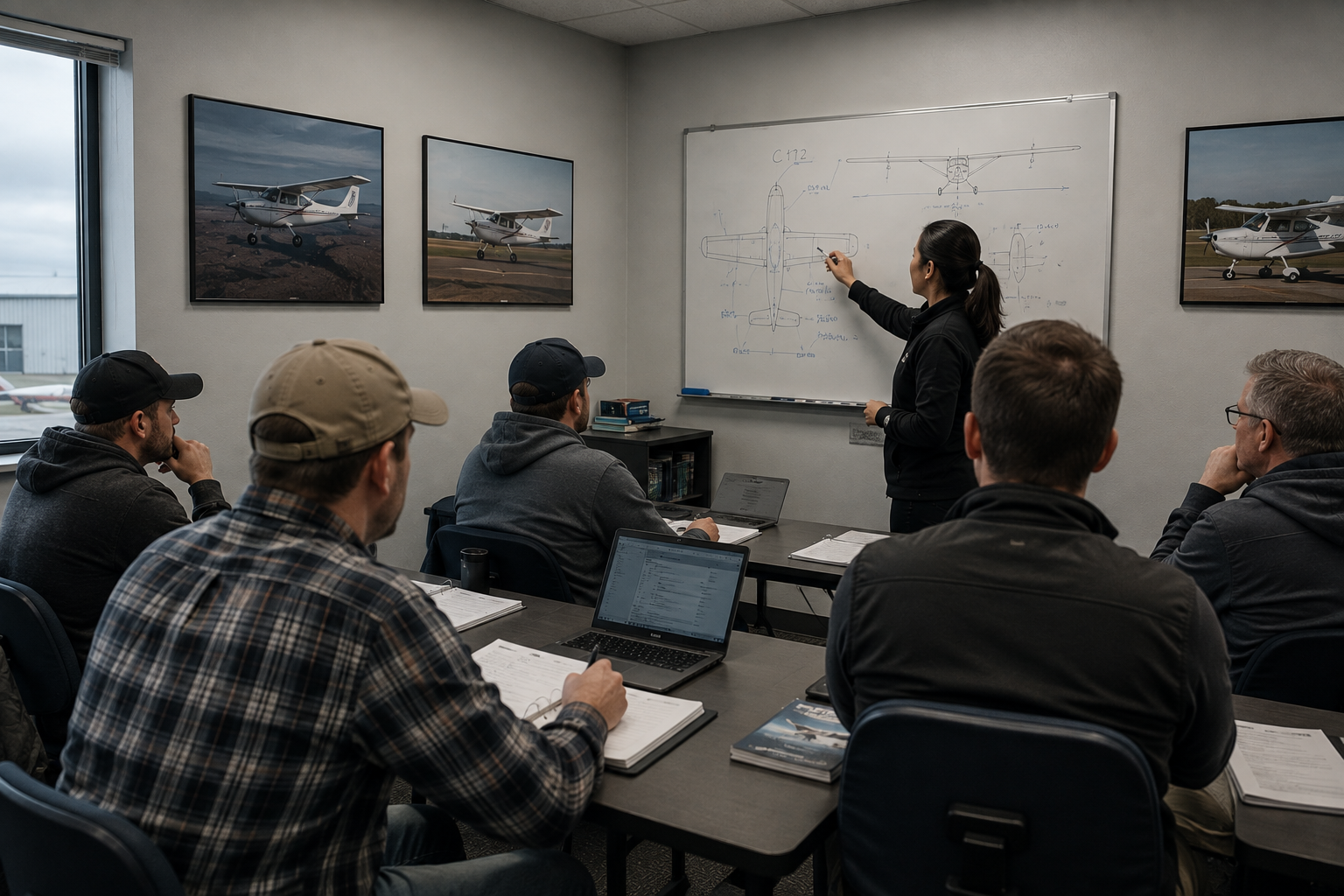
Knowing the material and teaching the material are two different certificates. You only get tested on one of them.
This is the gap the 7-day immersive ground school exists to close. It's not a lecture week. It's scenario work — you teach, you get critiqued, you teach it again better. Lesson plan development and critique. Everything student pilot, from pre-solo through solo endorsements. Complex regulations and endorsements. Logbook entries for student, private, commercial, recreational, sport, CFI, and added category and class ratings, which sounds tedious until an examiner hands you a logbook and asks you to fix it.
The FOI portion uses mind maps rather than rote definitions, which matters because the FOI section of a CFI oral is where a well-prepared applicant sounds like he's reciting and an actually prepared applicant sounds like an instructor.
Then there's the part nobody puts on a syllabus: confidence is a trained skill, not a personality trait.
The reason applicants freeze in an oral isn't ignorance. It's that the first time they ever said the words "adverse yaw" out loud to another human being was in front of a Designated Pilot Examiner. Say it forty times in a room full of peers first, under a former FAA and CAA examiner who will tell you exactly where the explanation fell apart, and the checkride becomes the forty-first time. That's a completely different experience.
Sessions run at the Palo Alto and Miami Beach campuses, or live-streamed if you can't travel. Same instructor, same room, same critique.
Phase Three: Intensive Flight Training With No Breaks
Here's where most CFI training quietly dies.
The flying phase is roughly 15 hours of dual with 10 to 12 hours of one-to-one pre and post-flight ground briefings — learning to fly, talk, and teach from the right seat simultaneously while sounding calm about it. Done consecutively, that's a couple of weeks. Done in the gaps of somebody else's schedule, that's most of a year.
Dedicated Instructors, Not Borrowed Ones
A structured program assigns you an instructor whose job that week is you. Compare that to the standard arrangement, where your CFI is building time toward a regional class date and your Tuesday afternoon slot is the first thing to move when a charter comes up.
Continuity isn't a luxury item here. When the same instructor sees you teach steep turns on Monday and Thursday, he's correcting a trend. When three instructors see you once each, they're all correcting the same thing for the first time.
Aircraft That Actually Fly
Your training calendar looks like a NOTAM for a closed airport — technically active, but nothing's happening. Every candidate who's waited on a part knows exactly what this feels like.
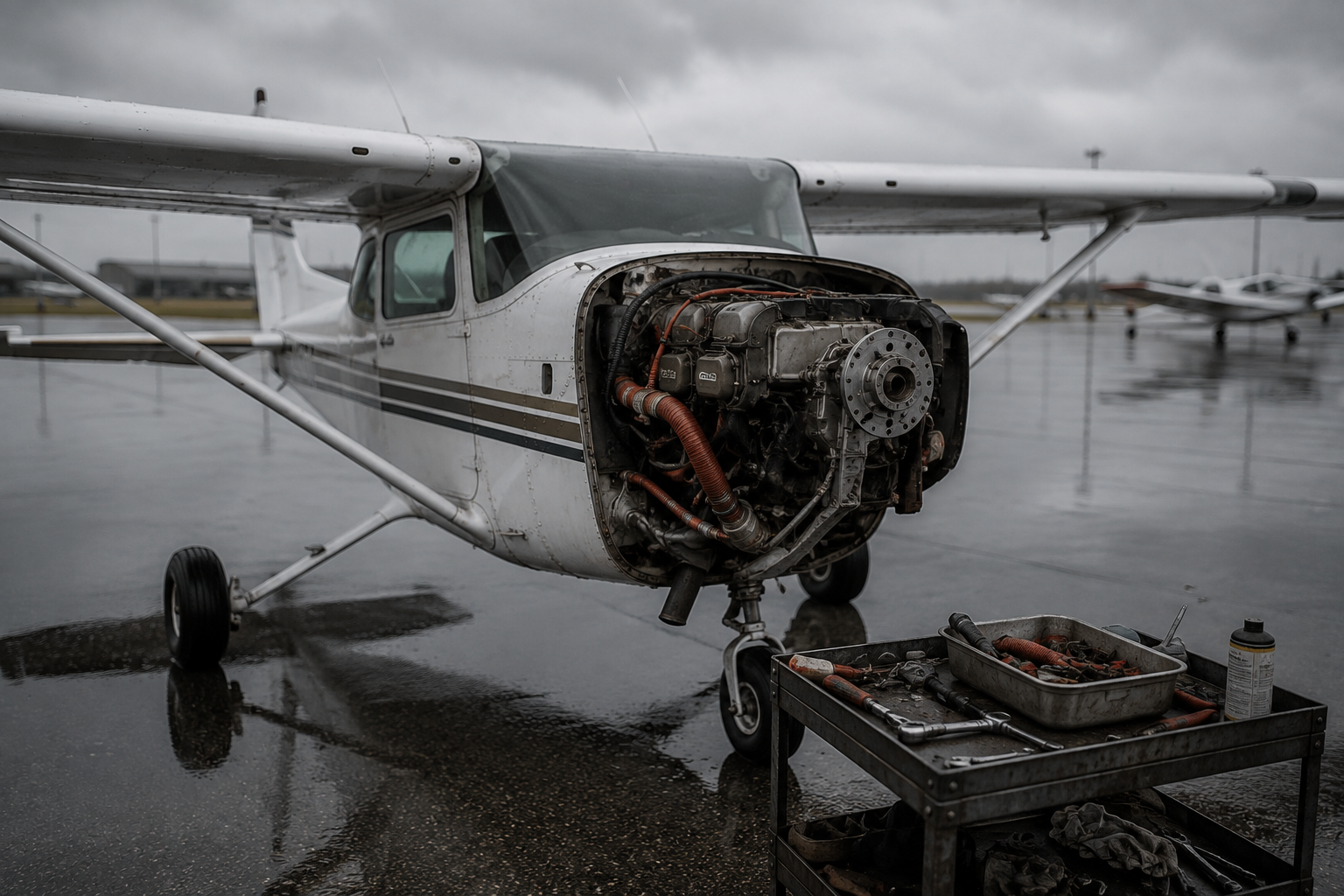
Reliable, available aircraft is not a glamorous selling point. It's just the difference between finishing in three weeks and finishing in March.
Why Breaks Are More Expensive Than They Look
Training that stops and restarts isn't training. It's a series of expensive reintroductions.
Skills decay fast in the right seat specifically because you're doing three things at once. Two weeks off and you're not rusty on the maneuver — you're rusty on narrating the maneuver, which is the entire skill being tested. Momentum isn't a motivational concept. It's a cost-control measure.
What Structured CFI Training Is Actually Buying You
Run the alternative honestly. Fifteen extra hours of aircraft and instructor time spent on ground material you could have covered at home, at current wet rates plus instructor fees, is several thousand dollars.
Then add a failed oral. Retest fee, a second examiner appointment, the scheduling delay, and a discontinuance that follows you into every airline application you will ever submit. Recruiter data is consistent on this — a couple of failures is survivable at most regionals, three is where the conversation ends.
Structure is the cheapest insurance in the process. Not because it's magic, but because it removes the two things that actually sink CFI candidates: knowledge gaps you didn't know you had, and time you didn't know you were wasting.
Start the System: Online Course + 7-Day Ground School — $1,499
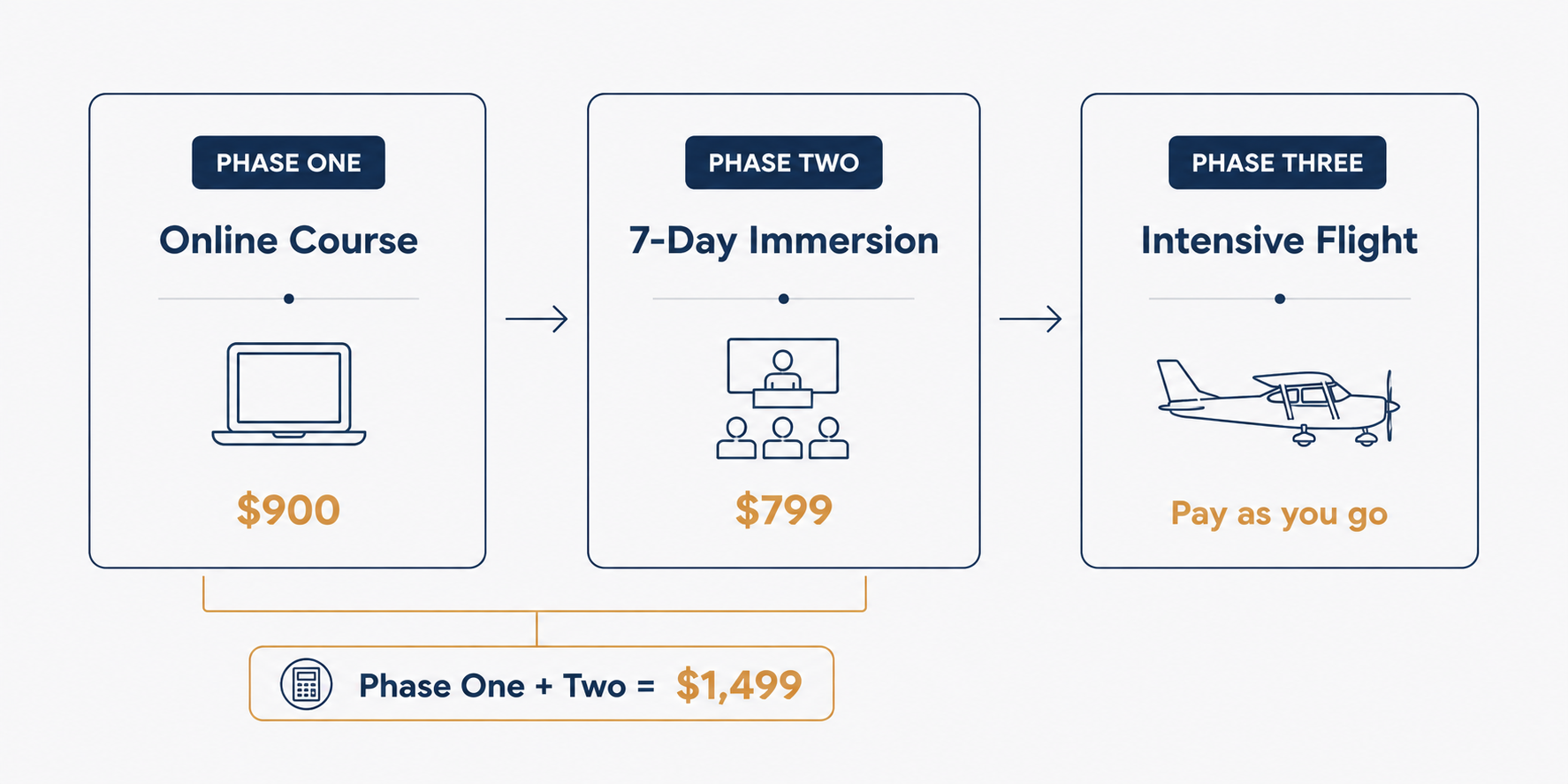
The first two phases are the ones you can start today, and they're the ones that determine how the third one goes. This is what structured cfi training looks like.
Phase One — 100% Online ACS CFI Course: $900 (standard $1,200)
Over 40 hours of HD video covering every ACS technical subject area and the Fundamentals of Instruction
Taught by a former FAA and CAA Designated Pilot Examiner
Custom curated lesson plans, workbook, and self-study guides you'll keep using as a working CFI
Embedded quizzes and assessments throughout
CFI Essentials and audio files included
Self-paced, mobile-friendly, any device
Phase Two — 7-Day Scenario-Driven Immersion Ground School: $799
In person at Palo Alto, CA or Miami Beach, FL, or attend live via streaming
Teaching practice, lesson plan critique, and oral prep under examiner-level scrutiny
Complex regulations, endorsements, and full logbook entry training
Knowledge endorsement provided on completion
Total: $1,499. Add Phase Three flight training when you're ready, or fly with your local instructor — the foundation transfers either way.
Enroll or schedule a class date: Register now.
Want to see the online course first? Preview the online course
(Questions? info@cfibootcamp.com or 650-600-1021.)