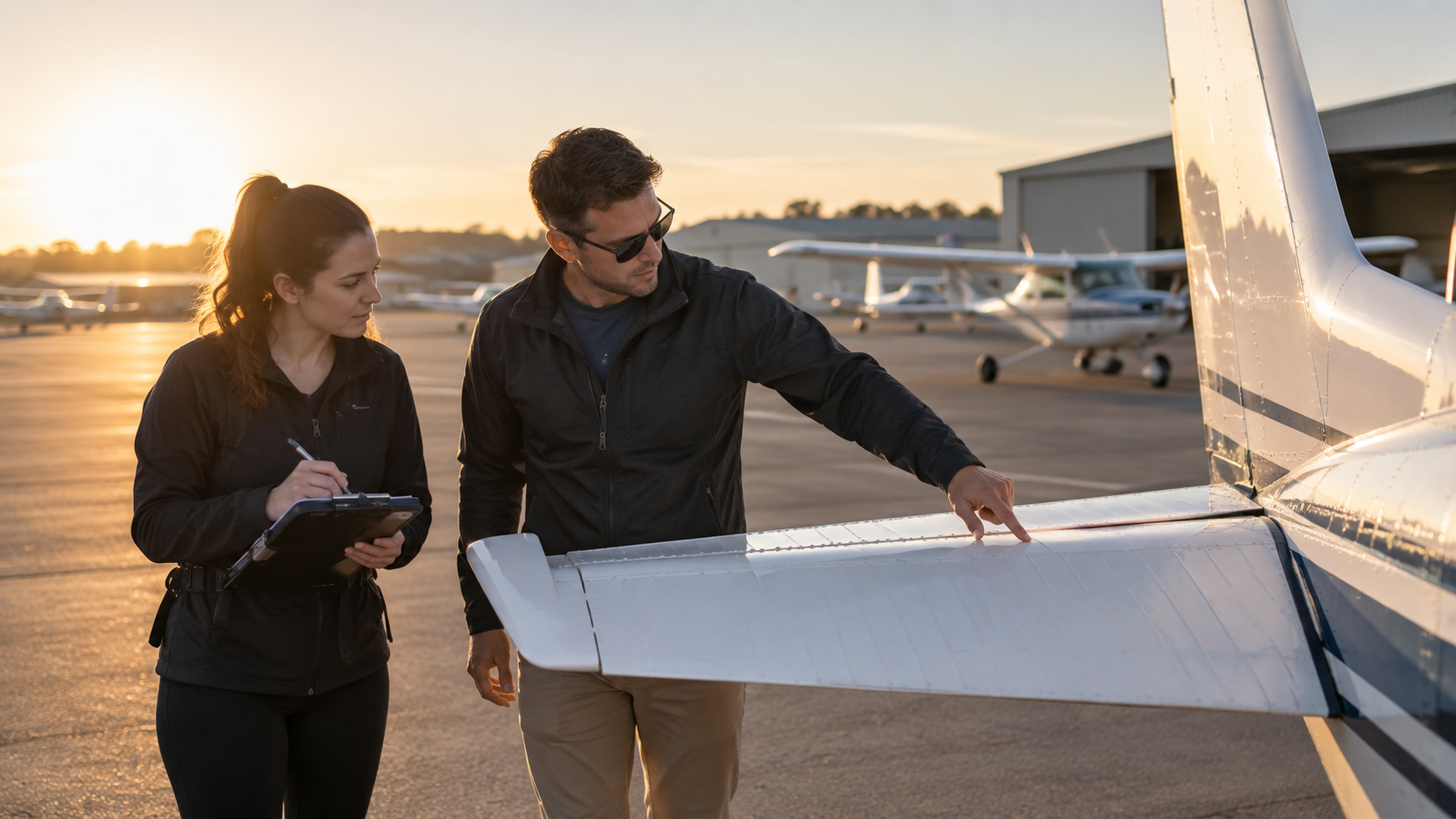
Getting a student pilot certificate is mostly a paperwork process, not a flying one, and that's exactly why it trips people up. Pilots who can brief a full cross-country without blinking will stall out on a government login screen, and that's a completely normal reaction to IACRA.
There's no maneuver to practice here, just a system a lot of first-time applicants find confusing the first time they open it. Here's the process in the order it actually happens.
What a Student Pilot Certificate Actually Is
A student pilot certificate is what authorizes you to fly solo, once your instructor endorses you for it. It's not the same as a medical certificate, and depending on how you apply, it may be combined with your medical into a single document (a combined student pilot certificate and medical certificate) or issued separately if you're training under BasicMed or without a medical requirement (as with some sport pilot training).
Step 1: Create an FAA Tracking Number (FTN)
Before anything else, you need an FAA Tracking Number, created through IACRA (iacra.faa.gov). This is a one-time account setup that gives you an FTN, which follows you through every future FAA certificate and rating application, not just this one. Save your login information somewhere you won't lose it, since you'll use this same account for every certificate after this one too.
Step 2: Complete Your Application in IACRA
Once you have an FTN, you (or your instructor, depending on the school's process) start a student pilot certificate application in IACRA. This involves entering personal information, citizenship status, and other standard identity verification fields. The application itself is usually the fastest part of this process; it's the account setup and navigating IACRA's interface for the first time that tends to slow people down.
Step 3: Identity Verification and Instructor/DPE Sign-Off
Depending on your training pathway, your student pilot certificate application typically needs to be verified and signed off by an authorized instructor, an FAA-designated examiner, or an FSDO, confirming your identity and application. Many flight schools handle this as a routine part of enrollment, walking new students through the IACRA process during their first few lessons rather than treating it as a separate errand.
Step 4: Receiving Your Certificate
Once processed, your student pilot certificate is generally issued as a plastic card, similar in format to other FAA pilot certificates, and mailed to you. Processing times can vary, so it's worth starting this process early rather than waiting until you're ready for your first solo, since your instructor can't endorse you to solo without it in hand.
Student Pilot Certificates for Sport and Glider Training
The process looks slightly different for pilots training toward a sport pilot or glider certificate specifically, since some of these pathways don't require a traditional FAA medical certificate at all, relying instead on a valid U.S. driver's license as evidence of physical fitness to fly. The IACRA application process for the student pilot certificate itself is largely the same across pathways, but it's worth confirming with your specific flight school which medical pathway applies to your training before assuming the standard combined certificate process is the one you need.
Common Points of Confusion
A few things trip up first-time applicants specifically:
Forgetting IACRA login information. Since your FTN follows you for life, losing access to your original account creates unnecessary friction on every future application.
Confusing the student certificate with the medical certificate. They may be combined or separate depending on your training pathway, and it's worth confirming with your instructor which applies to you.
Waiting too long to start the process. Since a solo endorsement requires the certificate in hand, starting IACRA early avoids a bottleneck right when you're ready to solo.
What Happens After You Have Your Student Pilot Certificate
Getting the certificate itself is a milestone, but it's not the finish line, it's what unlocks the next phase of training. Your instructor still has to provide the required pre-solo training and endorsements before you can legally solo, even with the certificate in hand. Some students assume the certificate itself grants solo privileges immediately, but it's one required piece among several, alongside a current student pilot endorsement in your logbook and your instructor's judgment that you're ready.
Choosing a Flight School Before You Finish This Step
A lot of applicants complete their student pilot certificate paperwork before they have picked a flight school, which is backwards if you want the smoothest possible start. It's worth understanding the difference between Part 61 and Part 141 training before you sign up anywhere, since that choice affects how your school will want your IACRA application handled and who signs off on it. It also helps to know a little about how your future instructors were trained themselves. A CFI who genuinely understands the fundamentals of instruction, not just how to fly the airplane, tends to catch confusion in a new student faster, and that starts mattering from your very first lesson after your student pilot certificate comes through.
It's also worth knowing that your student pilot certificate, once issued, generally does not expire on its own the way older paper versions once did, though your medical certificate or BasicMed status has its own separate currency requirements that matter for continuing to fly.
What If You Made a Mistake on Your IACRA Application
Data entry errors happen, especially for first-time IACRA users navigating an unfamiliar system. If you catch an error before your application is fully processed, contact your instructor or the FSDO handling your application promptly, since corrections are much simpler before final processing than after a certificate has already been issued with incorrect information. This is another reason to start the process early: it leaves room to catch and fix mistakes without the added pressure of an approaching solo date.
What to Do Next
If you're just starting flight training, ask your instructor on day one whether your school handles the IACRA student pilot certificate application as part of onboarding, or whether it's on you to start it yourself. Either way, starting it early removes one more thing to think about as you approach your first solo. Most flight schools are used to walking brand-new students through their first IACRA session, so don't let the online form itself feel intimidating. The paperwork is the easy part. The training that follows is where the real work, and the real payoff, begins. Give yourself a little grace during the first week of ownership too. It's normal to double-check your certificate number against IACRA more than once, and normal to feel like you're carrying an important document you don't fully understand yet. That feeling fades fast once you're actually flying, and it's a far smaller hurdle than most of what comes after it in your training. Keep a copy of the confirmation email from IACRA somewhere you can find it, since schools occasionally ask for it during your first week of lessons. None of it is complicated once you've done it, it just isn't something most people do more than once in their life. Take it step by step and you'll be finished before you know it. Then get back to studying for the checkride ahead of you.