Instructors Must Evolve With the Training Environment
AI for flight instructor training is no longer a conversation about the future — it's already happening inside your training environment, whether you're part of that conversation or not. Your students are already using it. Right now. Before they show up to the lesson. Probably while they're sitting in the run-up area between their last lesson and yours.
Artificial intelligence is already changing how students study, prepare for lessons, and research aviation topics. Ignoring it will not stop them from using it. It only leaves them without proper guidance — which is a different kind of problem, and one that sits squarely in the instructor's blind spot.
Most of them aren't using it particularly well. But they're not asking for help, because you haven't told them how.
Flight instructors don't need to become AI experts. That's not the bar. The bar is understanding enough to teach responsible use, explain its limitations, and help students verify what it produces before treating it as fact. That's a reasonable standard — and it's consistent with what good instructors have always done when a new resource showed up in the training environment.
AI in flight training isn't a future problem to prepare for. It's a present condition to manage. The only question is whether instructors will have a hand in shaping how it gets used — or whether students will figure it out themselves, which based on available evidence is how you end up with a student who can describe a chandelle in three beautifully structured paragraphs and has no idea which direction to roll out on.
So let's talk about it.
Students Are Already Using It — Whether You Know or Not
If you've noticed that student pre-lesson preparation has gotten suspiciously thorough lately, you may have caught the AI effect in action.
Students are using AI to summarize regulations, generate study guides, create mock oral questions, explain aerodynamic concepts, and prepare for lessons. Some of them are doing it thoughtfully. Most are doing it the way a student uses any new tool they don't fully understand — enthusiastically and without guardrails.
Here's the thing. Ignoring that doesn't stop it. It just means the student is using AI without any framework for what it can and cannot do. And "what it cannot do" is a fairly important list when you're building toward a practical test.
Instructors who get ahead of this aren't enabling shortcuts. They're providing supervision. There's a difference — and it's roughly the same difference between a student who understands why they enter the traffic pattern at a 45-degree angle and one who's doing it because you told them to.
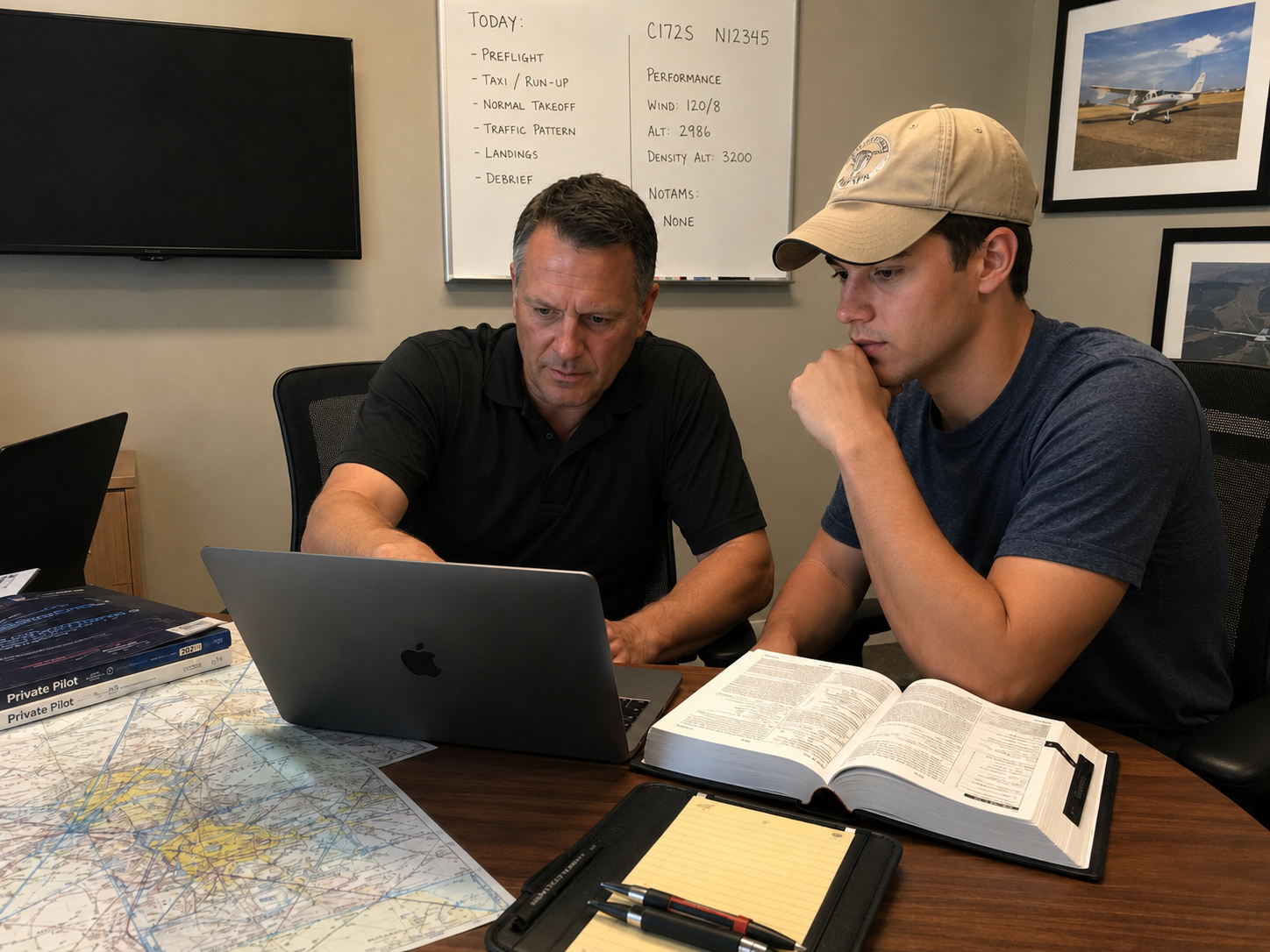
AI Is Good at Explaining. It Is Not Good at Flying.
Let's be precise about this, because students are going to blur these two capabilities together, and the gap between them is significant.
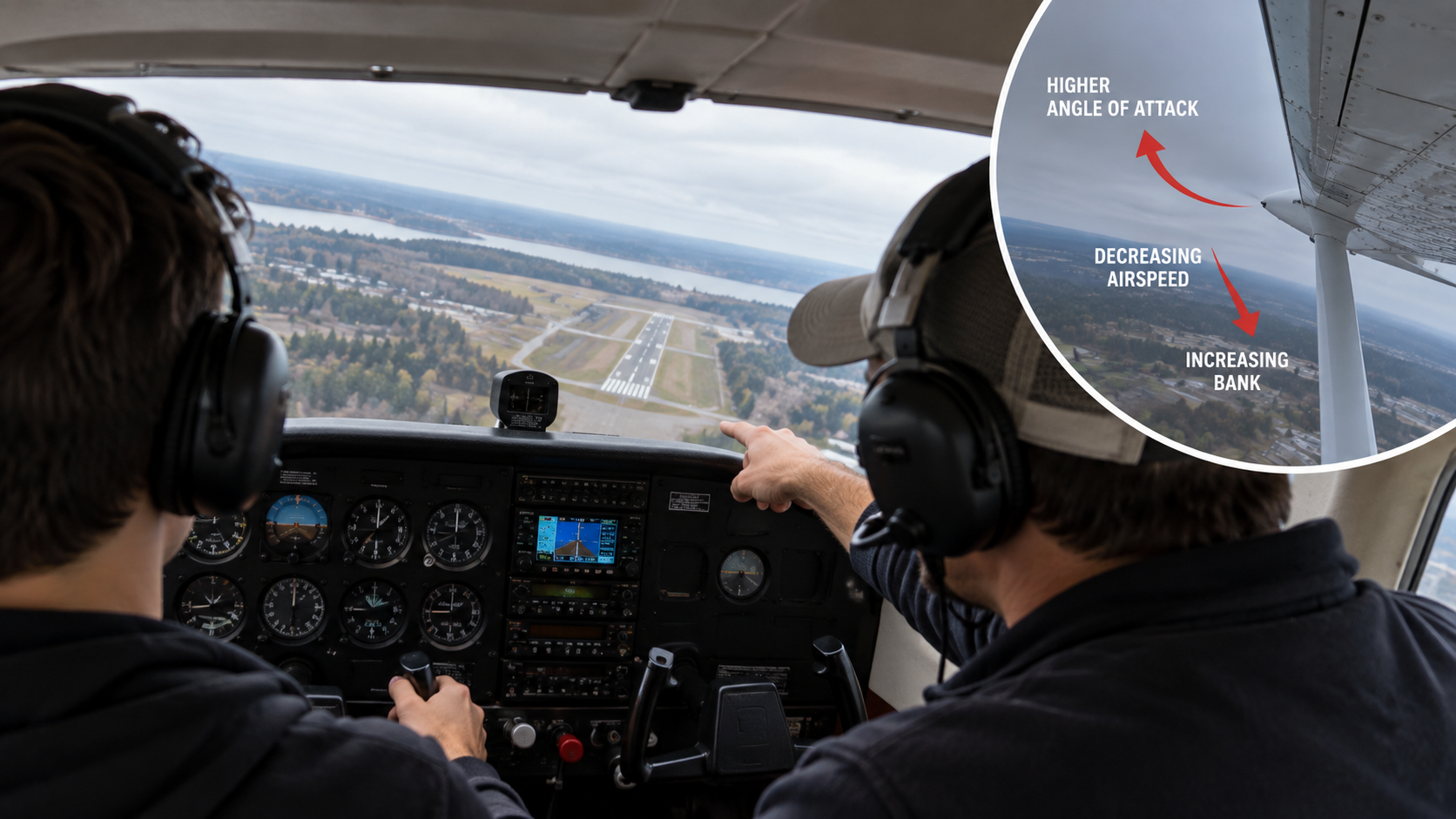
AI for flight instructor training can explain why altitude is commonly lost during steep turns. It can describe the aerodynamic relationship between bank angle and required back pressure. It can generate a realistic checkride oral question about weather decision-making and give you a sample answer that sounds completely authoritative.
What it cannot do is sit in the right seat and notice that your student just relaxed the back pressure through the roll-out, lost 80 feet, said nothing, and is ready to log it as a completed maneuver.
The gap between "can explain it" and "can do it" is exactly what flight instruction exists to close. AI makes it slightly easier for students to arrive at a lesson feeling like they've already crossed a bridge they haven't actually crossed. Your job is to notice that — not celebrate it.
How to Actually Use AI Productively in Training
Here's where it gets useful, and where most conversations about AI in flight training fall short. They stop at "students are using AI" without getting to the part about using it well.
Teach Basic Prompting as a Skill
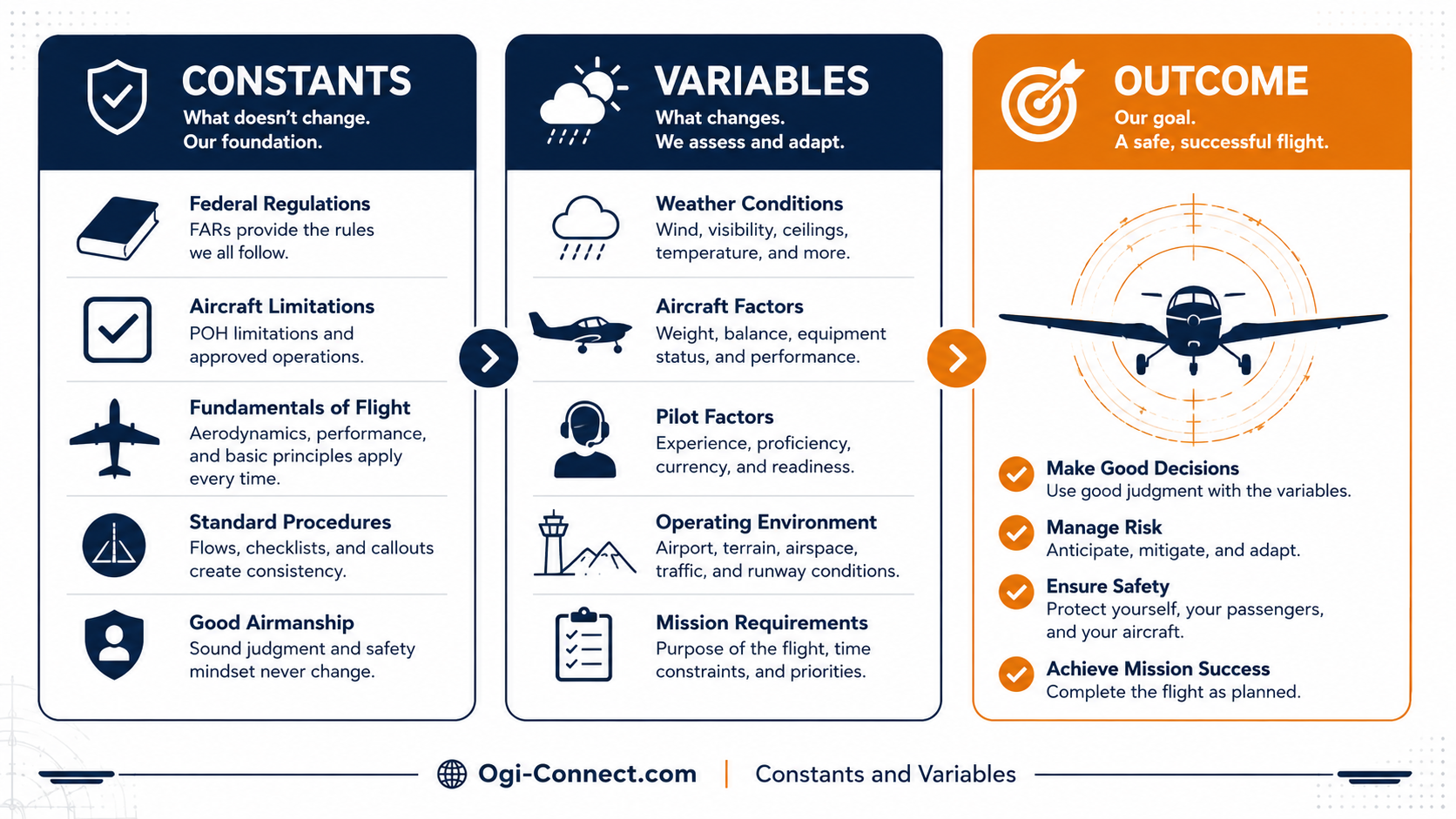
A helpful way to frame AI prompting for students is as a formula:
Constants + Variables + Desired Outcome = Better AI Response
The constants are the fixed elements of the scenario: aircraft type, certificate level, applicable regulation, training objective. The variables are the situation-specific elements: weather, airport environment, student experience level, the specific scenario being evaluated. The desired outcome is what you're asking AI to actually do — explain a concept, generate practice questions, compare two procedures, challenge an assumption.
A student who understands this framework will get a more useful result than one who types "explain steep turns" and copies whatever comes back.
Use AI for Lesson Preparation — Not Lesson Replacement
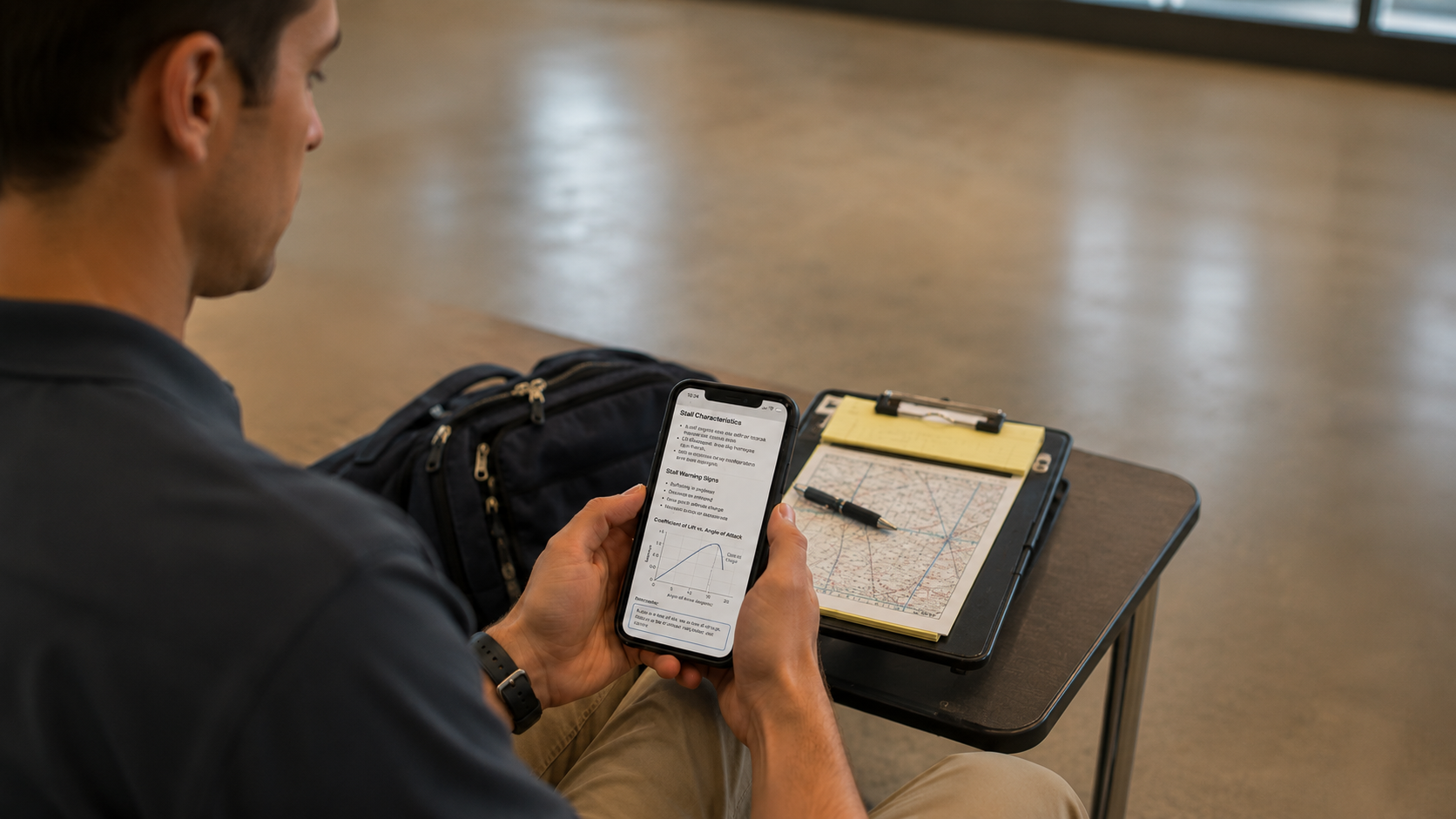
AI can help a student build a pre-lesson study outline, identify questions to bring to the instructor, review common errors associated with a maneuver, or understand a concept before arriving. Think of it as the preflight — useful, important, still not the flight itself.
What it shouldn't replace: the required reading, the instructor briefing, or the practical application in the aircraft. If a student shows up having used AI to prepare, that's a resource well used. If they show up having used AI to substitute for preparation, that's a different problem with similar packaging.
Generate ADM Scenarios at Volume
This is one of the genuinely strong use cases. AI can produce realistic aeronautical decision-making scenarios — fuel holds, passenger pressure, maintenance concerns, weather deterioration, unfamiliar airports — at a volume and variety no textbook can match.
A student who works through ten AI-generated ADM scenarios before a cross-country debrief is going to be more prepared to articulate the decision-making process than one who read the chapter once and circled some key terms.
The important part: the scenario should be evaluated, not just answered. The student explains the risks, defends the final decision, and identifies the specific risk management principle they applied. AI generating the scenario is the exercise. AI generating the answer is not.
Align With Organizations Building Technology for Your Domain
Here is a practical consideration that doesn't get enough attention in these conversations: not all AI tools are built the same way, and the source material they draw from matters enormously.
A general-purpose AI tool is pulling from everything. Aviation regulations, yes — but also cooking blogs, legal filings, marketing copy, fiction, and approximately seventeen years of forum arguments about which headset is worth the money. It has no way to know that the question you're asking is a flight training question that requires a flight training answer grounded in the ACS, the FARs, and current FAA guidance. It will give you something that sounds reasonable. Whether it's actually correct for your specific training context is a different question.
This is why aligning with organizations that are actively building ai for flight instructor training technology for your domain is worth paying attention to. Platforms like OGI Connect and CFI Bootcamp are designed specifically for the flight training environment. The material is constrained to what's relevant — checkride standards, regulatory requirements, instructional methodology, practical test preparation. The noise that comes with general-purpose tools is significantly reduced because the tool was built for a specific purpose by people who understand what that purpose actually requires.
Think of it this way. You wouldn't use a sectional chart designed for a different region and just hope the airspace is similar enough. The source material matters. The boundaries matter. A tool built for aviation training by aviation professionals who understand the ACS, the oral exam process, and how DPEs actually evaluate applicants is a fundamentally different instrument than a general-purpose language model asked to roleplay as a flight instructor.
This doesn't mean general-purpose AI has no place in your training workflow. It means that for high-stakes, domain-specific applications — checkride preparation, regulatory interpretation, endorsement standards, procedural review — the organizations building purpose-built tools for your industry are the ones worth leaning on. They've already done the work of constraining the data to what's actually useful. Let them.
Want to Learn How to Actually Use AI in Your Teaching?
The first day of the CFI Bootcamp 7 Day Ground School is dedicated to exactly this — helping instructors understand how to use AI for flight instructor training at a practical, working level. Not theory. Not a tech overview. The specific ways AI fits into your training workflow, where it earns its place, and where you need to keep your hand on the controls.
If Day 1 is what you need right now, you can grab it as a standalone for $199 — no obligation to continue, no full cohort required.
One day. One topic. A working understanding of AI that actually applies to what you do in the flight training environment.
📧 Nick@CFIBootcamp.com | 📞 650-600-1021
CFI Bootcamp | OGI Connect helps flight instructors build efficient, outcome-focused training practices — without the scattered study and wasted hours.