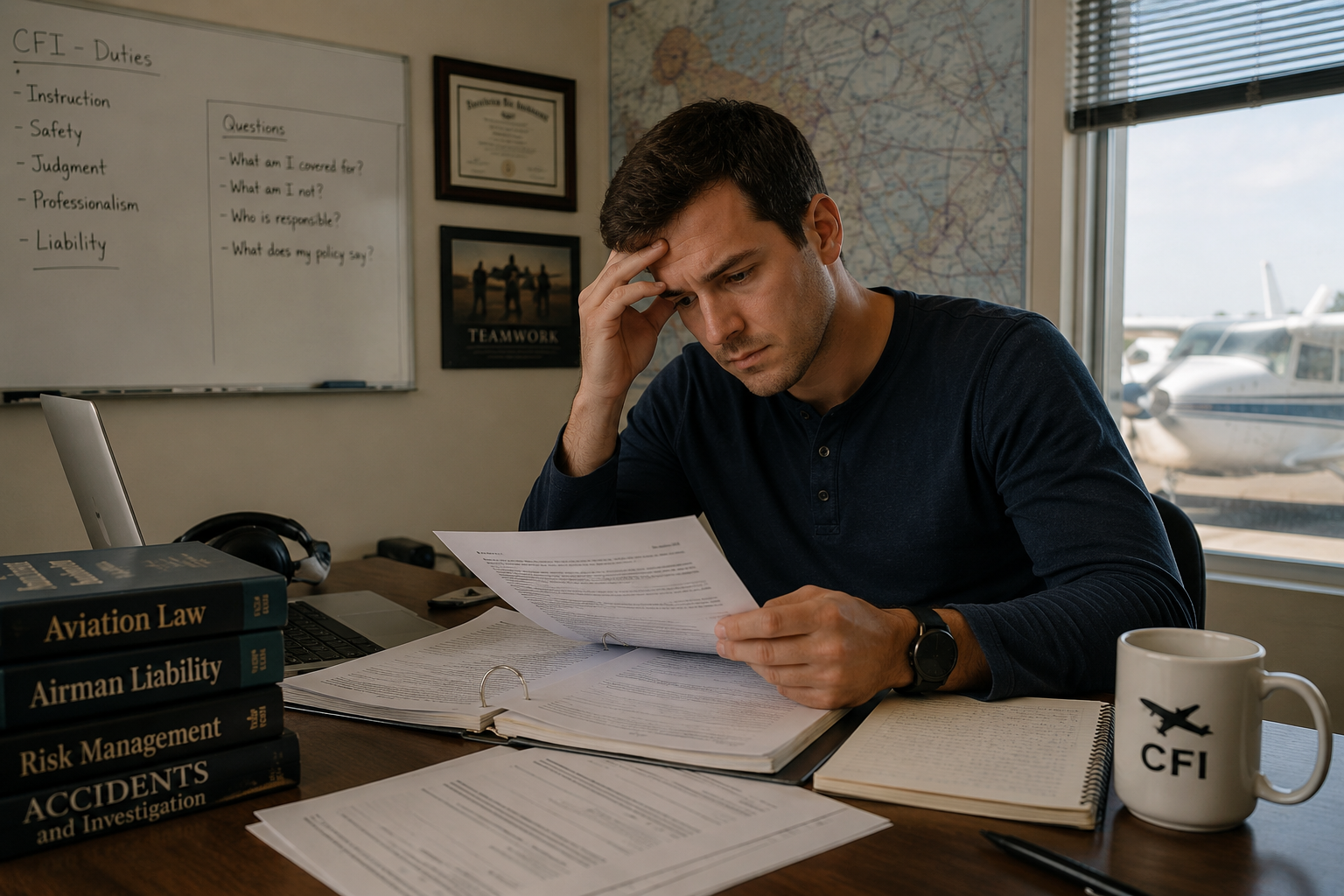
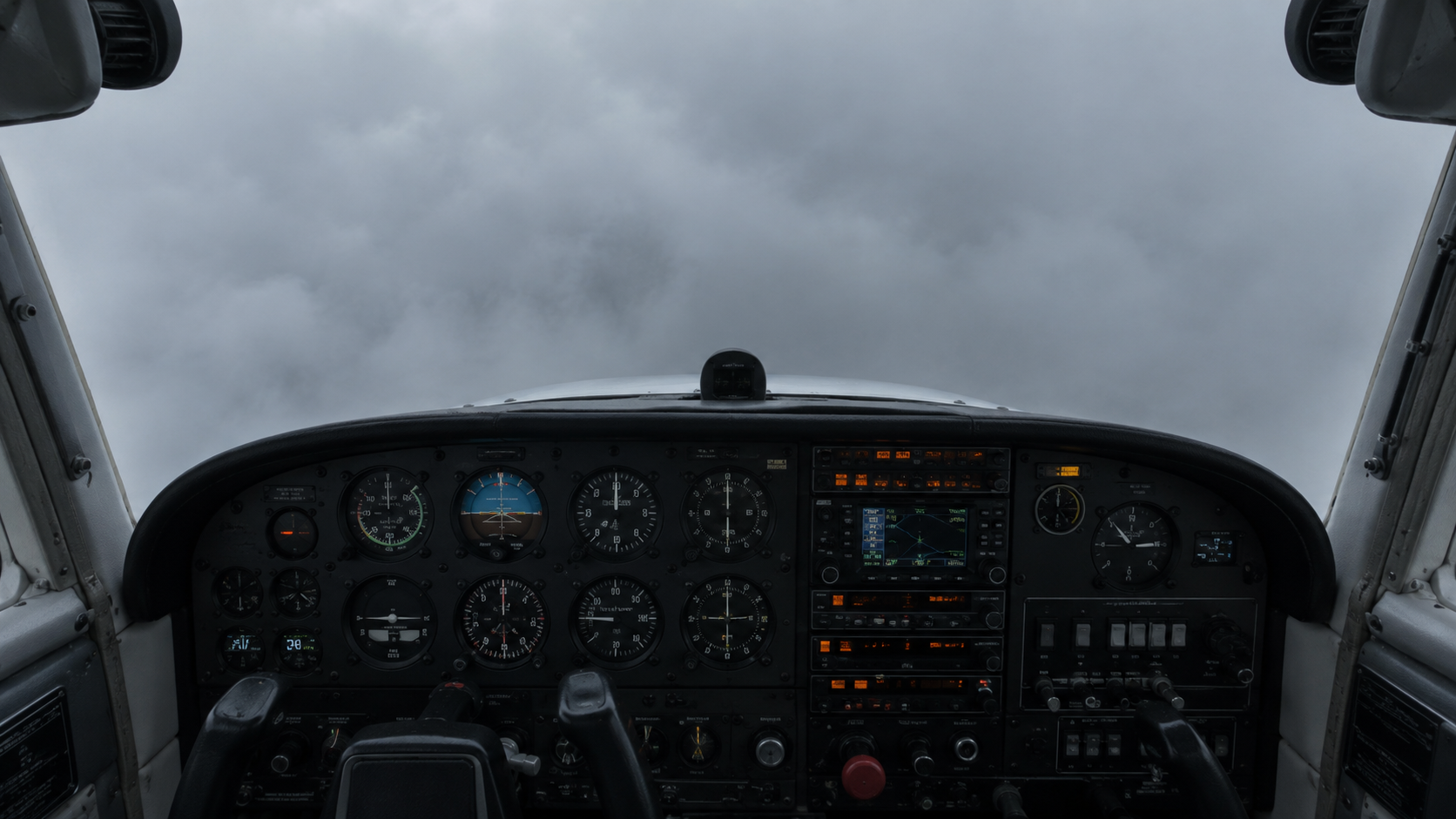
Your instrument student is in solid IMC, established on an airway, and the radio just... stops. Not a stuck mic. Not a busy frequency. Dead. No sidetone, no static, nothing coming back from ATC.
Most students freeze for a second. Most CFIs, if we're honest, taught this topic once with a mnemonic and never came back to it. "Squawk 7600, fly AVEF, you're good." That's not instruction. That's a magic word you hope survives contact with actual instrument conditions.
Lost comm isn't hard. It's just taught badly, almost everywhere, almost every time. Here's how to actually "teach lost comms ifr" so a student can execute it cold, three years from now, with adrenaline in their system and a checkride examiner or a real cloud deck testing whether the lesson stuck.
Why "Just Squawk 7600" Isn't Actually Teaching Anything
Squawking 7600 is a housekeeping step. It tells ATC what already happened. It does not tell your student where to go, how high to fly, or when to start the approach. Treating it as the headline of lost comm training is like teaching a student the mnemonic for a soft-field landing and skipping the actual flare.
The squawk matters. It's also the easiest part of the whole procedure, which is exactly why it's the part every ground school leans on. Spend thirty seconds on it and move to the parts that actually cause deviations.
The Route Part Nobody Actually Drills (AVEF)
14 CFR 91.185 gives four route options, in priority order: the route Assigned in the last clearance, the route ATC told you to expect via a further clearance, the route in your current flight plan, and finally the route you'd normally expect from the ATC clearances you'd typically receive for that flight.
AVEF is a fine mnemonic. The problem is most students can recite it and still can't apply it to an actual clearance history, because nobody made them do it more than once. Pull three or four real clearance sequences assigned route, an "expect" reroute, a filed flight plan and make the student pick the right one out loud, fast, without looking at notes. Do it on the ground before you ever do it in the airplane. The mnemonic is the label on the drawer. The drawer still has to have something in it.
Altitude Is Where Most Checkride Busts Actually Happen
This is the part that actually trips people up, students and CFIs both. The altitude to fly is the highest of three numbers: the minimum enroute altitude (or minimum reception altitude, minimum turning altitude, minimum crossing altitude, minimum obstruction clearance altitude — whichever applies) for the route segment being flown, the altitude ATC told you to expect in a further clearance, or the altitude last assigned.
Highest, not last-assigned, not whatever feels comfortable. A student who defaults to "whatever I was last cleared to" will fly straight through a rising MEA on a mountainous segment and never know it. Drill this with a chart in front of them. Give them a segment, an assigned altitude, and an expected altitude, and make them find the number that actually keeps the airplane clear of terrain. This is where a checkride oral goes sideways, and it's where a real NORDO event gets genuinely dangerous.
The Approach Clock Problem
Once the student is on the correct route at the correct altitude, the next question is when to start down. If an expect-further-clearance (EFC) time was issued, they leave the clearance limit at that time. If no EFC time exists, they leave as close as possible to the estimated time of arrival calculated from the filed or amended flight plan.
"As close as possible" is doing a lot of work in that sentence, and it's usually the first thing students forget under pressure. They remember the EFC-time case because it's concrete. They forget that ATC is expecting them to start the approach at their ETA if no EFC time was given, and a wandering delay looks the same to a controller as a genuine emergency. Practice both branches. Ask "what if you got an EFC time" and "what if you didn't" back to back until the answer is automatic instead of derived.
How to Actually Teach This So It Sticks
Here's the uncomfortable part. Most lost comm instruction consists of one ground lesson, one mnemonic, and zero follow-up. Then the CFI is surprised when the same student blanks on it during simulated lost comm on a checkride eight months later.
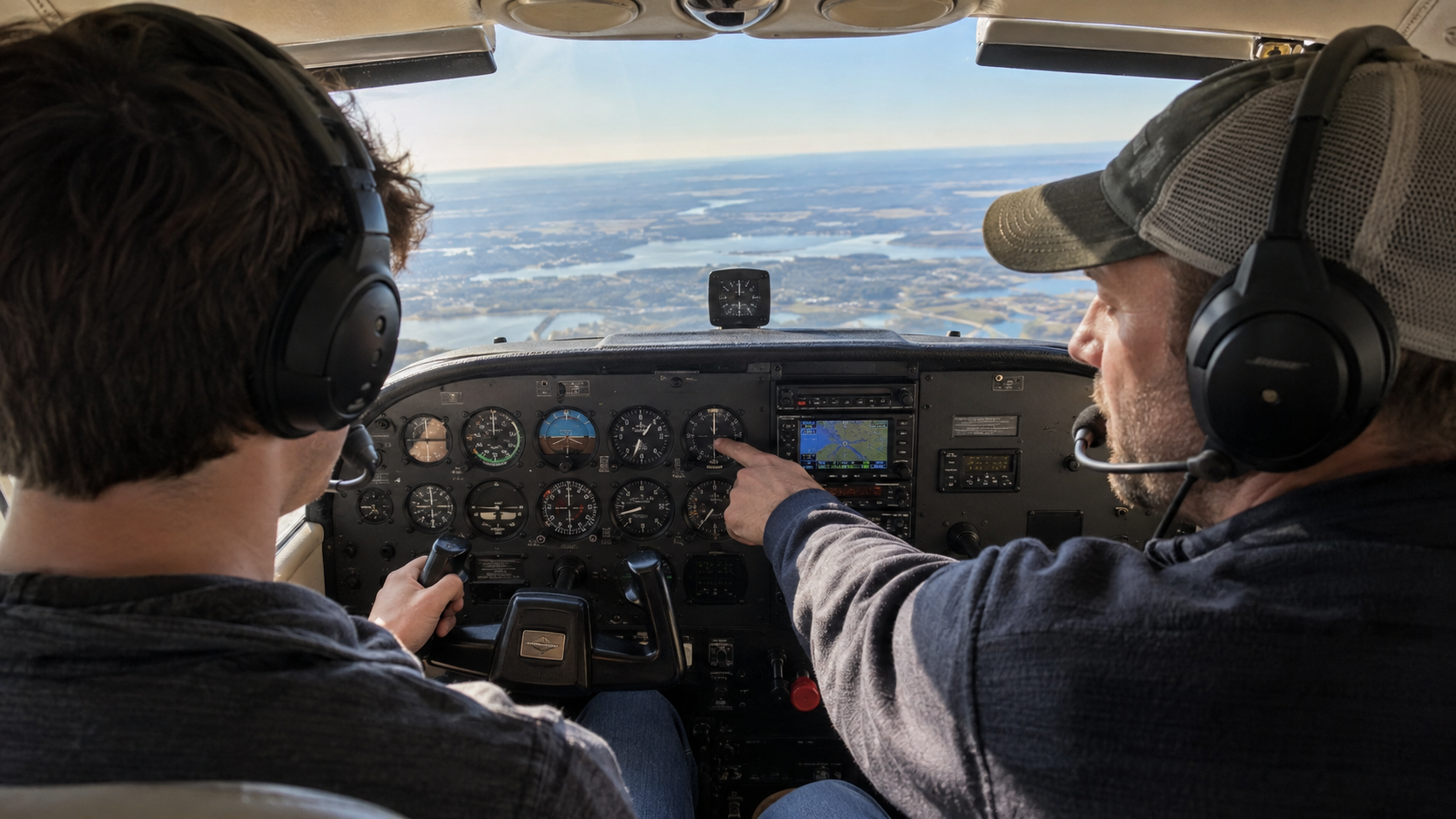
Teaching lost comms ifr, needs to be trained the way you'd train an engine failure: briefed once, then drilled cold, unannounced, in cruise, on an instrument lesson that was ostensibly about something else entirely. Pull the headset connector, point at the panel, and watch what the student actually does not what they can recite when they know it's coming.
A training record that shows lost comm procedures practiced once, in isolation, on the day you covered 91.185, is not a training record. It's a box checked.
The Real Point of This Whole Exercise
Lost comms ifr isn't really about the radio. It's about whether your student can run a procedure correctly when nothing is talking back to them and there's no one to bail them out. That skill transfers to a lot more than a NORDO event — it's the same muscle that gets used on a diversion, a partial panel failure, or any other moment where the airplane needs a decision and the instructor's voice isn't in the headset anymore.
Teach it once as a mnemonic and it dies the first time it's actually needed. Teach it as a procedure the student has run a dozen times under mild stress, and it survives contact with the real thing.
Power Hour: Teaching "lost comms ifr" So It Actually Sticks
September 12th, 2026 — 12:00pm ET — Lost Comm Procedures That Survive a Checkride (and a Real Cloud Deck)
Breaking down AVEF and MEA/EA/A into drills students can actually run cold
The EFC-time vs. no-EFC-time branch most CFIs never separate out
Where examiners actually fail students on this topic, and why
How to build unannounced lost comm practice into a normal IFR lesson
Absolutely free. No catch. Just show up.
Register here: https://cfibootcamp.kartra.com/page/Power-Hour-Lessons-Show
You already know the mnemonic. Your students don't need the mnemonic. They need the drill.
Run it before they need it for real.