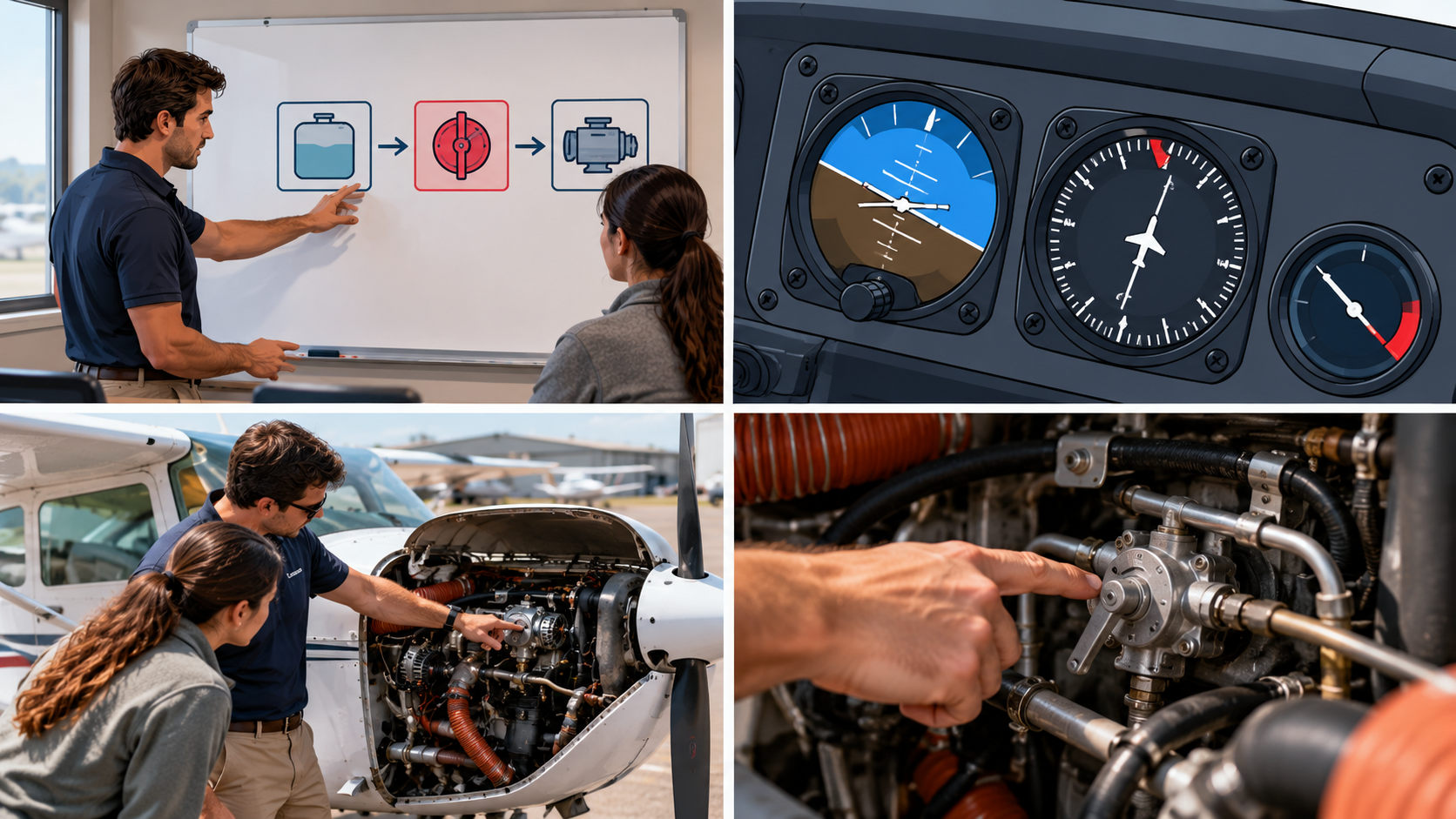
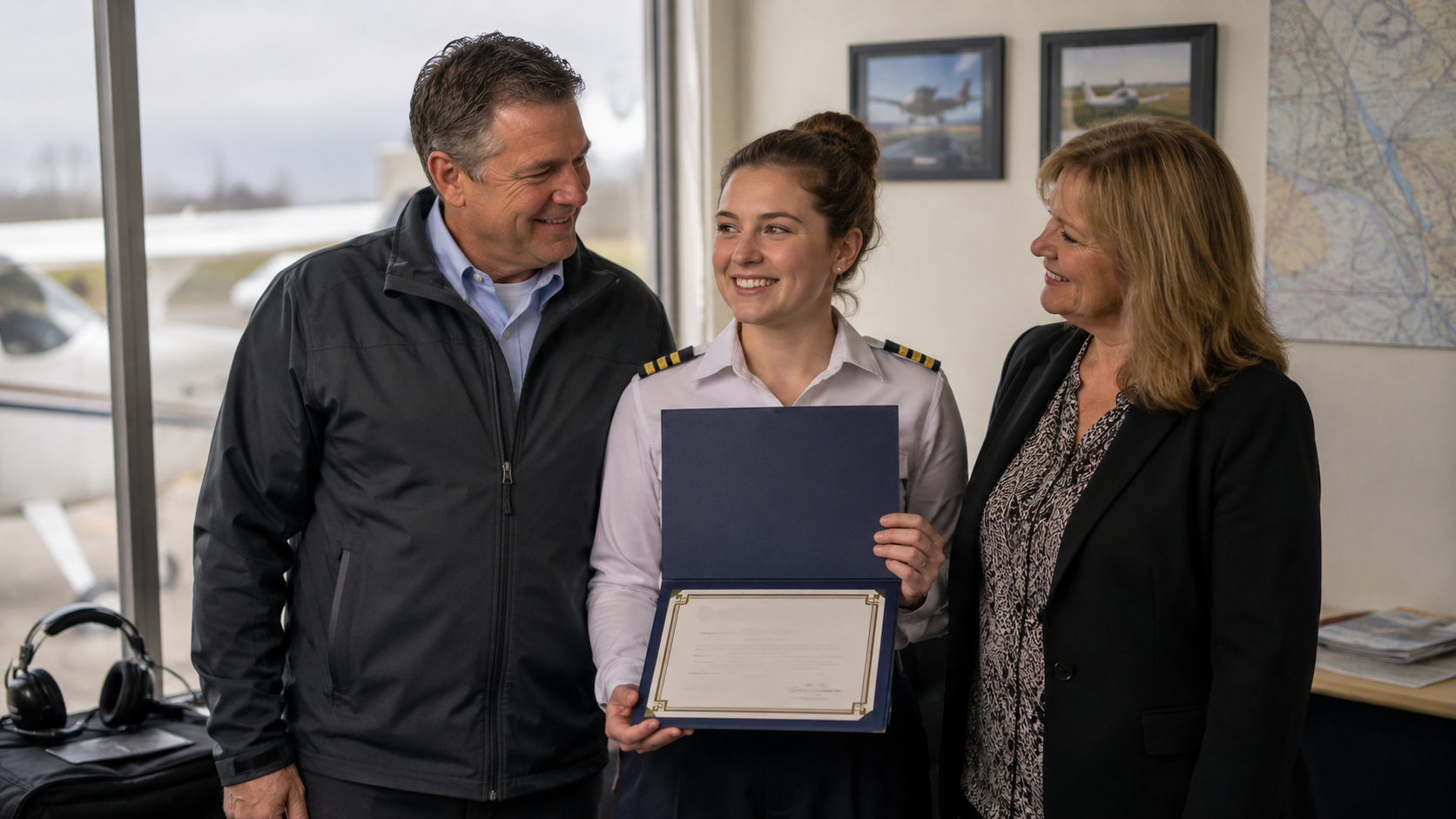
Most CFIs know FAA WINGS credit for CFIs exists as a concept, the same way most pilots know their POH has a chapter on performance charts they've never opened. Fewer instructors are actually logging it as part of their regular teaching, either for their students' benefit or their own.
That's worth fixing, because FAA WINGS credit for CFIs isn't an extra task bolted onto a lesson, it's largely a matter of documenting flight training you're already doing.

What the WINGS Program Actually Is
WINGS is the FAA's voluntary recurrent training program, built around the idea that pilots who fly regularly with a CFI on a mix of knowledge and flight activities have fewer accidents than pilots who train once for a certificate and then fly for years without structured review. Pilots complete a combination of online courses and flights with a CFI, logged through the FAASafety.gov WINGS system, to satisfy a "phase" of the program.
Completing a WINGS phase also satisfies the flight review requirement under 61.56, which is one of the more practical reasons pilots and instructors use it instead of a standalone flight review.
How a CFI Logs WINGS Credit for a Student
The flights don't need to be a special standalone event. A CFI conducting instrument proficiency work, a flight review, or even a well-structured proficiency flight can often apply that same flight toward a pilot's WINGS phase, as long as the maneuvers and topics covered line up with the phase requirements the pilot selected in the FAASafety.gov system. The instructor logs the flight activity through their FAASafety.gov account, tied to the pilot's WINGS profile, after the flight.
The practical shift for most CFIs is planning the lesson with the relevant WINGS phase requirements in view from the start, rather than realizing afterward that the flight would have qualified if it had been structured slightly differently.
WINGS and Your Own 61.197 Recent Experience
CFIs have their own renewal requirement under 61.197, and completing a WINGS phase as the instructor (not just crediting a student) is one of the accepted paths to renew a flight instructor certificate, alongside the standard FIRC (Flight Instructor Refresher Course) route. For CFIs who are actively teaching, staying engaged with WINGS activity across a renewal cycle is often a more natural fit than blocking out a weekend for a FIRC, since it builds on instruction you're already doing.
WINGS Versus a Standard FIRC for CFI Renewal
Instructors weighing WINGS against a traditional Flight Instructor Refresher Course should think about how the two actually fit their teaching style. A FIRC is a concentrated block of time, usually a weekend, covering a broad curriculum of current topics. WINGS is spread across the renewal period and built from your actual flying and teaching activity rather than a separate classroom exercise. For a CFI who's teaching regularly and willing to structure some of that teaching around WINGS phase requirements, the program essentially turns ongoing work into renewal credit. For a CFI who teaches sporadically or prefers to knock renewal out in one sitting, a FIRC may be the more practical option regardless of WINGS' advantages.
Neither approach is inherently better. The right choice depends on how your teaching schedule is actually structured and whether you'd rather spread the renewal requirement across ongoing work or handle it in one concentrated block.
Making the Choice for Your Own Renewal
Instructors who already track FAA WINGS credit for CFIs with their students tend to default to the same system for their own renewal, since the phase requirements and logging habits are already familiar. That familiarity is worth more than it sounds: an instructor who understands how WINGS credit gets documented rarely has to relearn the process under deadline pressure right before their 61.197 window closes.
Some instructors alternate between the two anyway, using a FIRC in years when they want a broader refresher on regulatory changes and WINGS in years when their teaching load already lines up with the phase requirements. Neither approach needs to be permanent, and switching between them from one renewal cycle to the next doesn't cause any complications with the FAA as long as the current cycle's requirements are fully met before the deadline. Either way, the paperwork itself takes only a few minutes once you know where to log it, which is exactly why most of the instructors who skip it are skipping something easier than they assume. Once the habit is in place, it becomes a routine part of how you close out a lesson rather than a separate chore to remember later.
Why This Is Worth Building Into Your Teaching
Beyond satisfying requirements, WINGS participation gives instructors a structured way to talk to students about recurrent training instead of it being a one-time "get the certificate and you're done" conversation. Students who complete WINGS phases regularly are also, in practice, easier to schedule for ongoing instruction, since the program gives them an explicit reason to keep flying with a CFI rather than letting currency lapse.
Choosing WINGS Activities That Fit the Flight You're Already Planning
The FAASafety.gov system lets a pilot choose from several activity paths within each WINGS phase, which means a CFI has real flexibility in structuring a flight to qualify. An instrument proficiency check, for instance, can often be built to satisfy both its own requirement and a WINGS instrument-phase activity in the same flight, if the specific tasks line up with what that phase calls for. The planning has to happen before the flight, though. Trying to retroactively match a completed flight to WINGS requirements after the fact is a much less reliable way to get credit than checking the phase requirements first and building the lesson around them.
This is a habit worth building into recurring students specifically, pilots who come back every year or two for a flight review or proficiency work. Structuring those recurring flights around WINGS from the start turns an occasional currency check into an ongoing relationship with a clear, trackable proficiency record.
How WINGS Participation Reflects on a CFI
Beyond the mechanics, a CFI who actively uses WINGS with their students is demonstrating something concrete about how they approach instruction: recurrent, structured, and documented, rather than ad hoc. For instructors building a reputation, especially ones marketing themselves to safety-conscious owner-pilots or renters at a flying club, being fluent in WINGS is a small but real credibility signal that a lot of instructors leave on the table simply because they never got in the habit of using it.
If you're mapping FAA WINGS credit for CFIs onto your regular teaching, treat it like paperwork that follows flights you're already doing, not an extra lesson to schedule. For the fundamentals that this kind of credit builds on, see our guide on how to become a flight instructor, and if you're still deciding between training paths, see our comparison of Part 61 vs Part 141. For the ground-instruction side of teaching well under any program, see our breakdown of the Fundamentals of Instruction.
What to Do Next
If you're not currently tracking WINGS phases for your regular students, the fastest way to start is picking your next few flight reviews or proficiency flights and checking the current phase requirements on FAASafety.gov before you plan the lesson, not after.