Every CFI has met the student who walks in convinced that forty hours on a flight simulator for pilot training is functionally the same as forty hours of stick time. It isn't. He's not wrong that the sim helped — he's wrong about which forty hours he actually needed.
And every CFI has also met the instructor on the other side of this, the one who still calls anything on a screen "video games" and won't touch a procedure trainer with a ten-foot pole. He's not wrong that some of it is a waste of an evening. He's wrong about which parts.
Sim apps aren't a shortcut and they aren't a gimmick. They're a tool with a very specific job, and most people are using it for the wrong one. This isn't a "sims are great" article or a "sims are a toy" article. It's a field guide to which parts of the sim world actually shorten your training timeline, and which parts are just an expensive way to feel productive on a Tuesday night.
Where a Flight Simulator for Pilot Training Actually Earns Its Keep
The strongest use case for a flight simulation app has nothing to do with flying. It's procedures. Checklist flow, avionics familiarization, instrument scan development, emergency procedure sequencing — the stuff that's genuinely just memorization and muscle memory dressed up as flying.
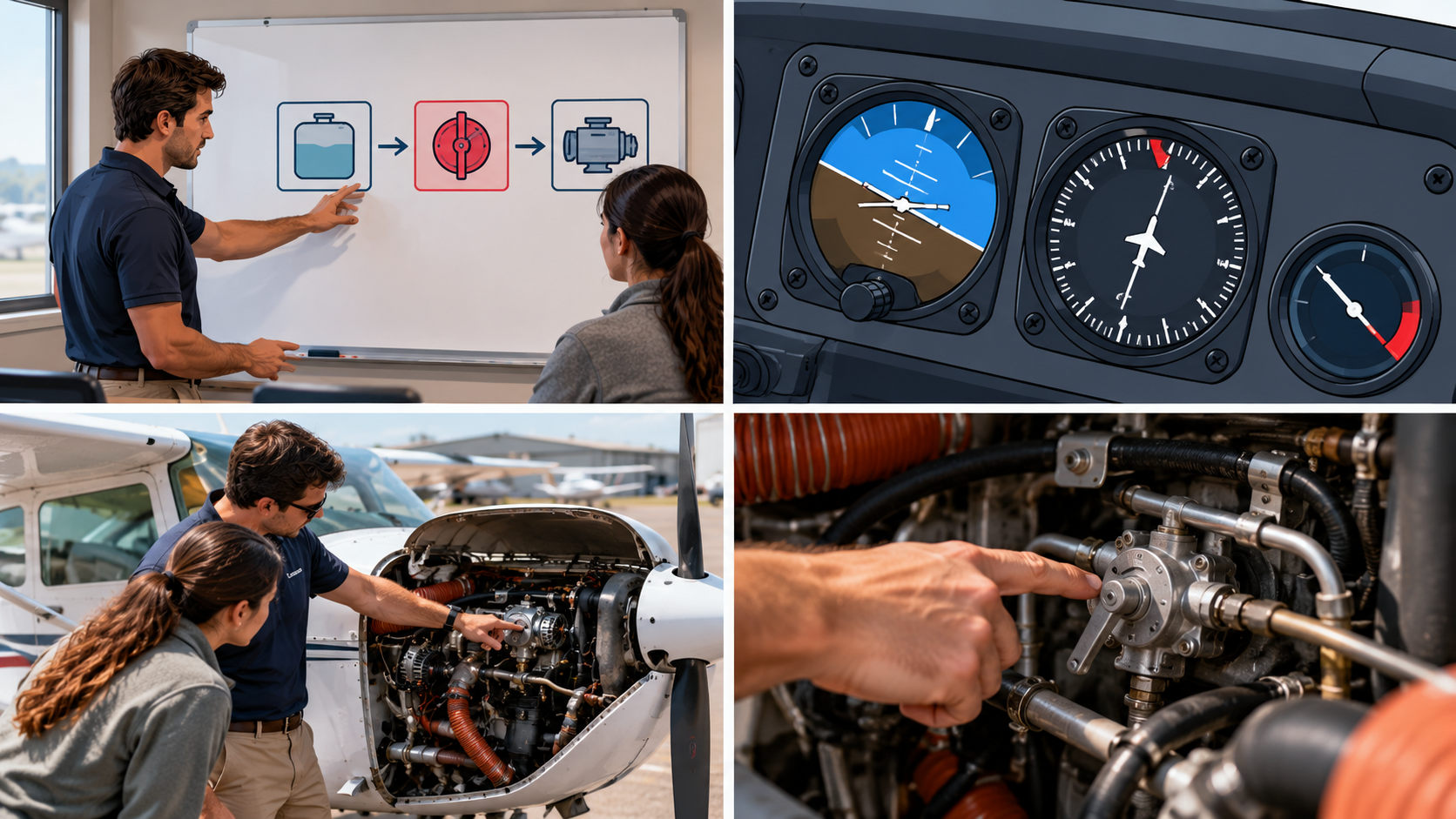
A student who's already run the G1000 startup flow forty times on a tablet before they ever touch the real panel shows up to the airplane knowing where the mixture knob lives. That's real Hobbs time you get back. You're not burning a $180-an-hour lesson teaching someone which knob does what.
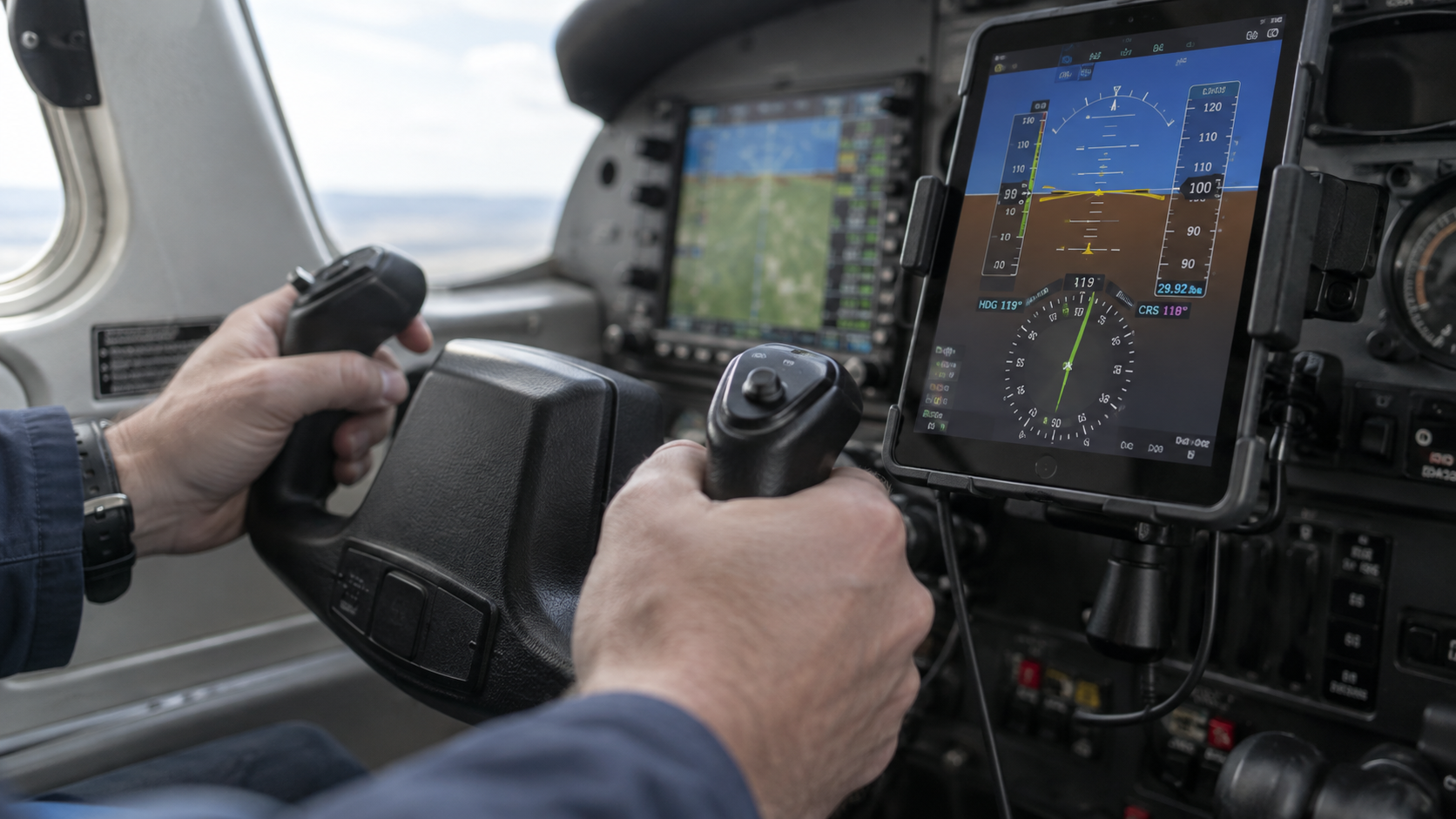
Chair-Flying With Better Graphics
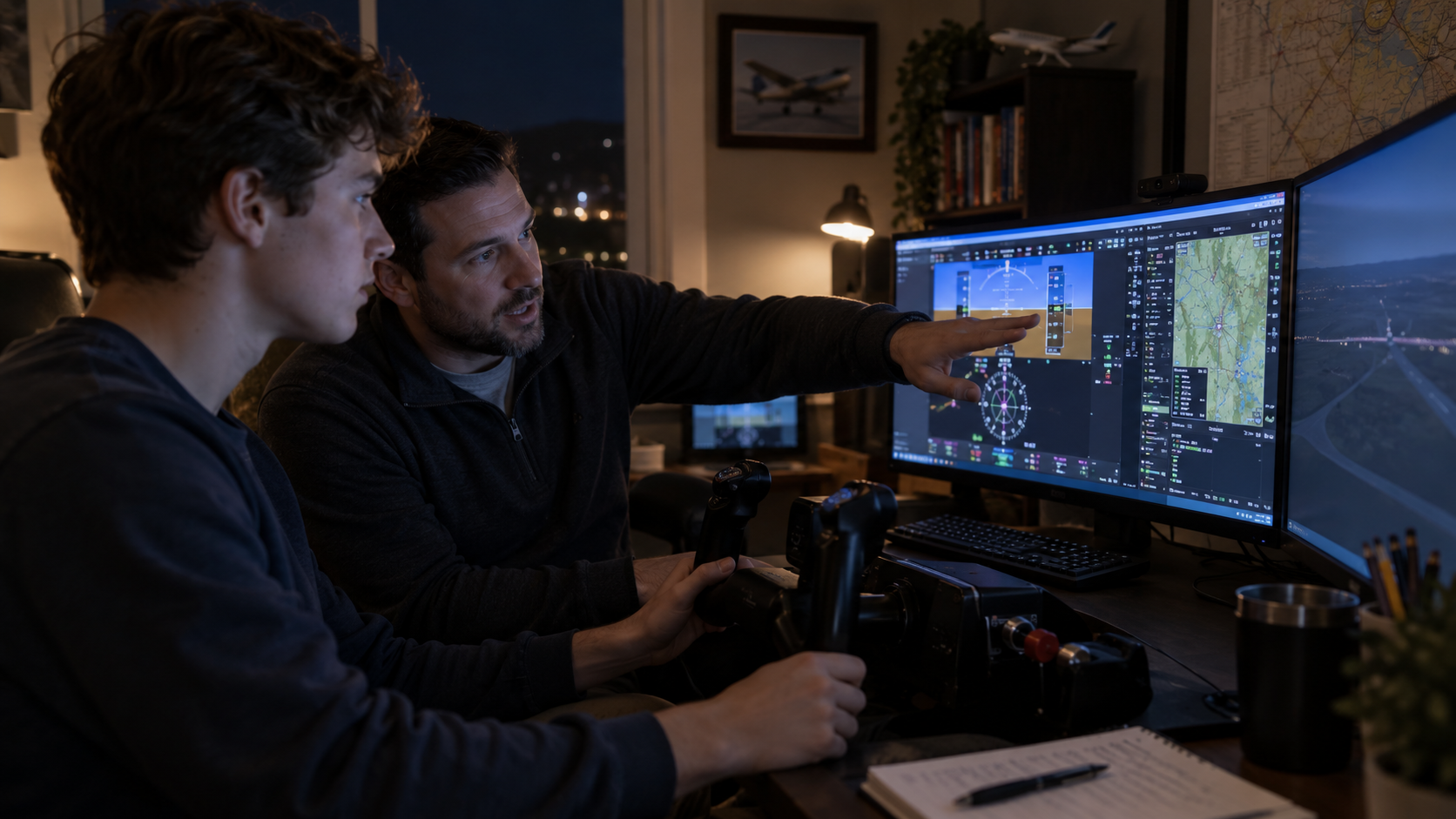
Good instructors have always told students to chair-fly maneuvers at home. A quality sim app is chair-flying with instrumentation that actually moves. Steep turns, holds, approach sequencing — rehearsing the flow before you're paying to do it in the airplane is one of the highest-leverage uses of a sim app, full stop.
Where They Quietly Waste Everyone's Time
Here's the part nobody wants to say out loud: most sim time logged by students isn't training. It's entertainment with a yoke attached.
Flying an ILS into a major international airport at 3 a.m. in a virtual 172 because it's fun does not build the skill you think it builds. It builds familiarity with a joystick and a general sense of what an approach plate looks like. That's not nothing, but it's also not the CFI checkride prep the student thinks they're getting.
The bigger problem is what sim time can't touch at all. Stick-and-rudder feel, the physical sensation of an actual stall, the way real turbulence makes a student's hands do something completely different than they planned — none of that transfers from a screen. A student who's spent sixty hours on a home sim and eight hours in the airplane is not sixty-eight hours into their training. They're eight hours in with a very confident understanding of procedures they haven't actually flown yet.
The Loggable Hours Trap
Yes, time in an FAA-approved AATD or BATD counts toward certain requirements — including some instrument currency requirements, which we've broken down separately here: Flight Simulators and Instrument Currency Rules Every CFI Must Know. That's a regulatory fact, not a training strategy. Logging the time is not the same question as whether the time was well spent, and plenty of instructors have let a student rack up sim hours with no objective attached simply because the hours were loggable.
How to Actually Build Sim Time Into a Syllabus
The difference between a sim app that accelerates training and one that just wastes an evening comes down to one thing: whether the session had a job to do. It's the same principle behind structuring CFI training in the right order in the first place — a sim session with no plan wastes time the same way a syllabus with no sequence does.
A few ground rules that separate the two:
Assign a specific objective before every session starts. "Practice holds until entries are automatic" is a session. "Go fly around for a while" is a hobby.
Debrief it like it was a real flight lesson. If you wouldn't let a student walk away from a lesson without a debrief, don't let them walk away from a sim session without one either.
Use it to front-load procedures, never to replace stick-and-rudder practice. The sim buys back ground-school time in the airplane. It does not buy back landings.
Save the free-flight, just-messing-around sessions for after the objective is met, not instead of it. There's nothing wrong with a student enjoying the app. There's something wrong with that being the entire session.
Do this consistently and the airplane time gets more efficient, because the student isn't spending real dollars figuring out where the alternate air knob is. Skip it, and you've just given your student a very convincing way to feel prepared for a checkride they aren't actually ready for.
The Real Takeaway
Sim apps don't replace flight time and they were never supposed to. What they replace is wasted ground time — the part of training where a student is fumbling through a checklist or guessing at an approach plate instead of already knowing it cold. Used with an objective, sim time makes the airplane hours count for more. Used without one, it just makes the student feel busy.
The instructors getting the most out of a flight simulator for pilot training aren't the ones with the most sim hours logged. They're the ones treating every session like it has a job to do.
Join Us for This Week's Power Hour
We're covering all of this live, with real examples of what to assign and what to skip.
Using Flight Simulation Apps to Accelerate Training: What Works and What Wastes Your Time
Saturday, September 26, 2026 — 12:00 PM ET
What we'll cover:
Which sim platforms and apps actually move the needle for CFI candidates and student pilots, and which ones are just expensive screen time.
How to build a sim session around an actual training objective instead of letting a student "go fly around" for an hour.
What AATD and BATD logging rules do and don't tell you about whether the time was well spent.
How to fold sim time into a syllabus without cutting into the flight hours that actually build stick-and-rudder skill.
This one's practical, not theoretical. Bring your syllabus questions.
Absolutely free. No catch. Just show up.
Your students are going to use these apps whether you assign them or not. You might as well be the one deciding what they're actually learning from them.
Forty hours on a sim app is not forty hours of flying. It can still be forty hours well spent.
Show up Saturday and we'll show you how.
Related Reading
Flight Simulators and Instrument Currency Rules Every CFI Must Know
Why Most CFI Training Falls Short of a First-Time Checkride Pass