You passed the commercial checkride. You shook the examiner's hand, took the photo with the temporary airman certificate, and posted it. Somebody in the comments said "onward to CFI." You agreed.
That was a while ago.
Since then you've bought the Aviation Instructor's Handbook. You've watched maybe forty minutes of a fundamentals of instruction video before your phone rang. You've told three different people that you're "working on your CFI," which is technically true in the same way that a taxiway is technically part of the flight.
Here's what nobody tells commercial pilots: the CFI is where the pipeline clogs. Not because the flying is harder. The flying is the part you already know how to do.
The CFI Is a Different Job From Every Rating Before It
Every certificate before this one asked the same question: can you fly the airplane to standard?
The CFI asks something else entirely. Can you fly the airplane to standard, from the wrong seat, while talking, while somebody else has their hands on the controls doing something mildly alarming, while you explain why it's alarming, in words a nervous 19-year-old will actually retain?
That's four jobs stacked on top of each other. Most candidates prepare for one of them.
The right-seat problem is the one people underestimate. Your sight picture is wrong. Your throttle hand is wrong. Your instinct to fix the airplane is correct and also the thing you now have to suppress, because the whole point is letting the student get close enough to the edge to learn where the edge is. Instructors call this "sitting on your hands." It takes real hours to build.
The teaching problem is bigger. You have to explain adverse yaw. Not recite it. Explain it, on a whiteboard, to a person who has never heard of it, in under four minutes, without saying "um" nine times.
Both of those are trainable. Neither one is intuitive.

The Stall Doesn't Feel Like a Stall
Here's the pattern, and it's remarkably consistent.
Nobody quits their CFI. There's no dramatic moment where a candidate decides to stop. What happens is slower and much more expensive.
You start the online course. You get through the learning theory section. Work picks up. Three weeks go by. You come back and realize you don't remember the difference between the levels of learning, so you restart the section. Now you're behind where you were in March.
You schedule the FOI knowledge test twice and reschedule it twice, because you keep feeling like you're not ready. You are, in fact, not ready, because you keep restarting the course.
You book a lesson with an instructor who has three other students and a Part 135 side gig. He cancels for weather. The reschedule lands eleven days later. In those eleven days your right-seat landings get noticeably worse, so you spend the first 0.6 of the lesson getting back to where you already were.
Multiply that loop by nine months. That's the CFI stall. It doesn't announce itself and it doesn't hurt on any given day. It just quietly turns a certificate that could take weeks into a project that takes most of a year and costs several thousand dollars more than it needed to.
Nothing went wrong. That's the whole problem.
The Two Knowledge Tests Everyone Postpones
The FOI and the FIA are not hard tests. They are enormous tests.
The Fundamentals of Instructing covers learning theory, the teaching process, human behavior, effective communication, assessment, planning, risk management, and professionalism. None of it is complicated. All of it is unfamiliar, because you've spent your entire flying career learning aerodynamics and regulations, and now the FAA wants you to know the difference between rote and correlation.
The Flight Instructor Airplane test is a wider version of the knowledge you already have, with a heavy dose of teaching-context questions layered on top.
Both are pure sit-down work. Neither requires an airplane, an instructor, a weather window, or a maintenance release. Which is exactly why they get postponed — they're the only part of the CFI that has no external deadline pressure, so they lose every scheduling contest against everything else in your life.
And they poison everything downstream. Walk into a CFI ground school with the FOI unfinished and you spend the week half-learning teaching content while your brain runs a background process about the test you still owe. You get less out of every hour you paid for.
Where the Money Actually Goes
Ask a candidate why their CFI got expensive and they'll point at the hourly rate. The hourly rate is rarely the culprit.
The cost lives in the gaps:
Re-learning. Every break longer than about two weeks costs you the first portion of the next lesson getting back to your previous standard. Do that eight times and you've paid for several hours of flying that taught you nothing new.
Instructor fragmentation. Three different instructors across five months means three different opinions about how you should be teaching lazy eights, and at least one full lesson spent renegotiating something you'd already settled.
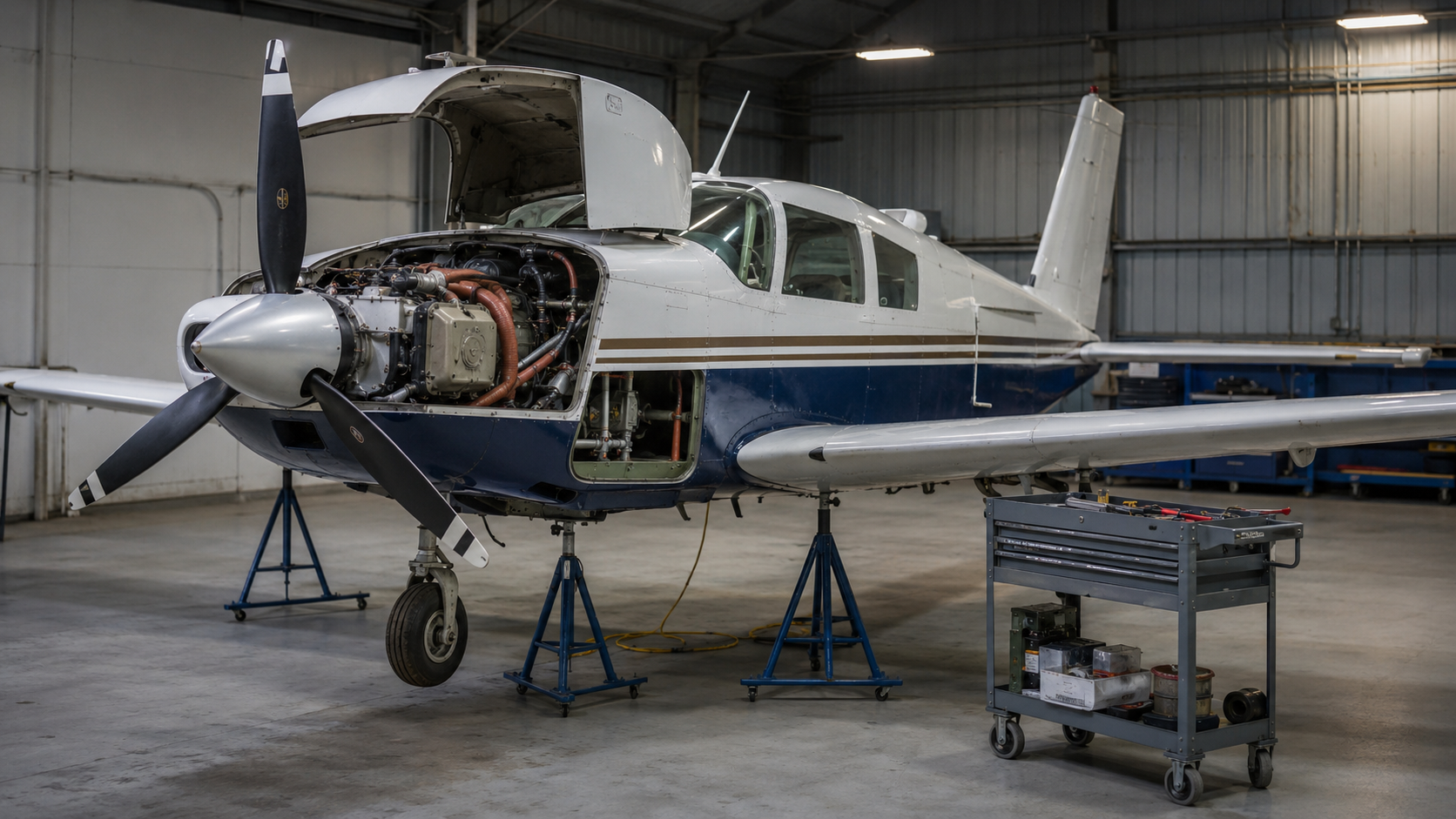
Aircraft downtime. The trainer goes in for its 100-hour, the alternator gives up, the schedule shifts, and your momentum takes the hit along with your calendar.
Restart tax. The single most expensive item on the list, and it never appears on an invoice. It's the hours you spend recovering ground you already covered.
None of that is a skill problem. All of it is a sequencing problem.
Six Questions That Tell You Where You Actually Are
Most stalled candidates cannot answer these cleanly. Try it. Be honest, since nobody's grading it.
What have you actually finished? Not started. Finished, with a certificate or a logbook endorsement to show for it.
What should already be done by now? There's a correct order to this, and the order matters more than the effort.
What is the single next thing? If the answer is a list of six items, you don't have a next thing. You have a fog.
What are you spending time on that doesn't move you forward? Some of it is comfortable. Comfortable is not the same as productive.
What can you knock out on your own, tonight, with no airplane and no instructor? For most candidates the honest answer is a lot more than they think.
What genuinely requires an instructor in the seat next to you? That's the expensive resource. Spend it on the things only it can do.
Answer those six and the fog usually clears in about ten minutes. Most people never sit down long enough to do it, because the vague version of the plan is easier to live with than the specific one.
The specific one has dates on it.
"Quickly" Is a Sequencing Word
There's a version of this certificate that takes three weeks. There's a version that takes eleven months. Same candidate, same skill level, same airplane.
The difference is order of operations.
Knock out the self-paced work first — the course, the two knowledge tests, the spin endorsement — because none of it competes for an airplane and all of it makes everything after it cheaper. Then compress the ground instruction into a block where you're not losing retention between sessions. Then fly, hard, in a stretch short enough that your right-seat proficiency is still climbing instead of decaying between lessons.
Do it in that order and the pieces reinforce each other. Do it in a scattered order and each piece has to be partially rebuilt before the next one can stand on it.
This is not a motivation problem, and nobody needs to want it more. Wanting it more is what produces the eleven-month version, because effort applied in the wrong sequence still feels like effort.
The Certificate Is Not the Point
Worth saying plainly: the CFI is the first certificate you'll use to make money in aviation, and it's the one that will teach you more about flying than everything before it combined.
You do not fully understand a maneuver until you've had to explain it to somebody who's getting it wrong in real time. That's the actual gift of this rating. Every airline pilot who came up through instruction will tell you the same thing, usually unprompted, usually at length.
But you have to finish it first.
The pilots who get there aren't smarter or more disciplined. They just stopped guessing at the order and got a straight answer about what comes next.
Final Approach: A Free Workshop on Finishing Your CFI
If any of the above landed a little too accurately, we built something for exactly this.
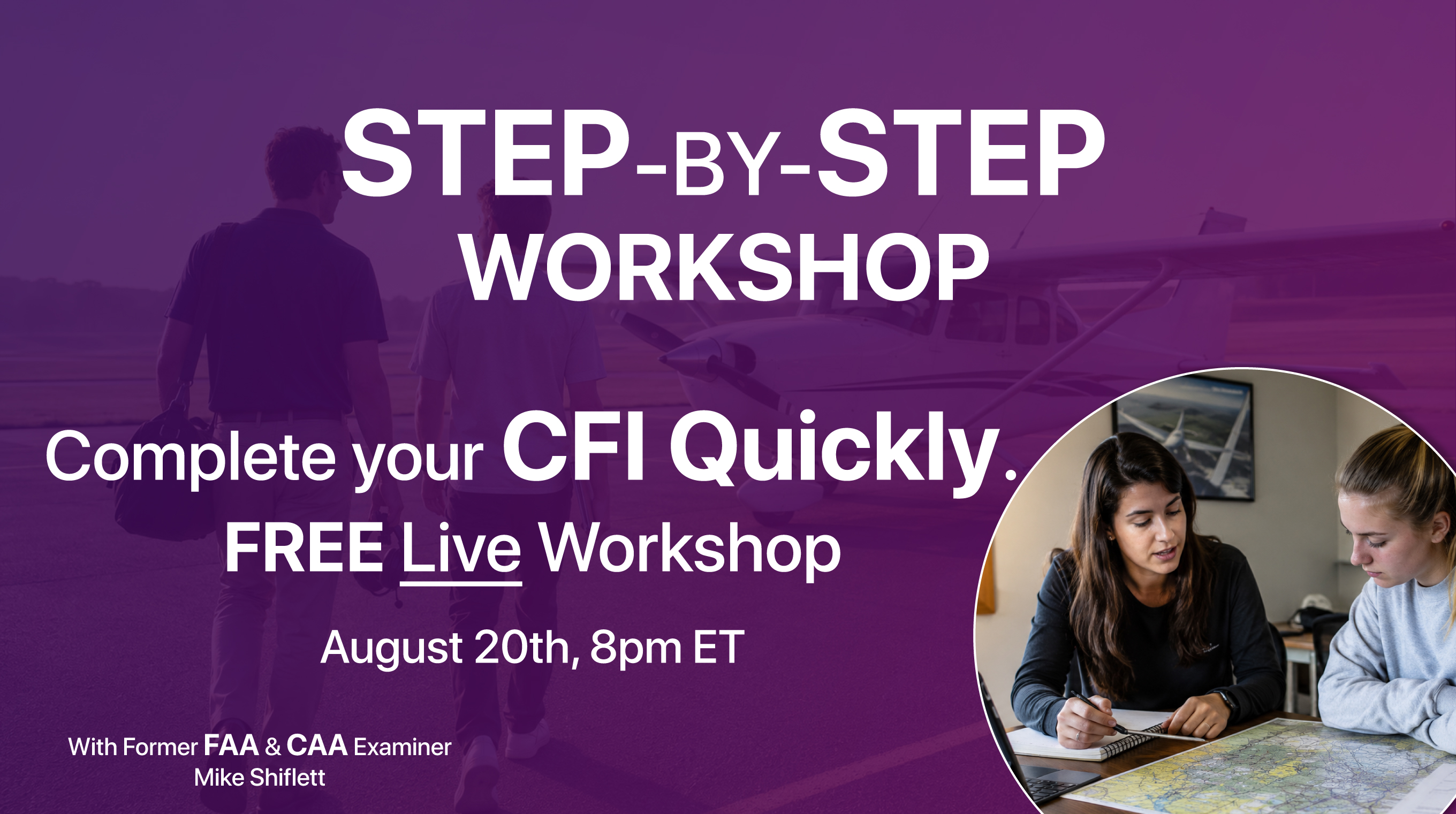
Thursday, August 20, 2026 — 8:00 PM ET | Final Approach: A Step-by-Step Workshop on How to Complete Your CFI Quickly
Hosted by Mike Shiflett, former FAA DPE and CAA Examiner — somebody who has watched several hundred candidates walk into this checkride and knows precisely which ones were ready.
What we'll cover:
Where you actually are in the process, and what should already be finished by this point
The next priority step from wherever you're standing right now
What you can complete on your own versus what genuinely requires an instructor
The sequence that turns a nine-month CFI into a three-week CFI
You'll also leave with the workshop outline, a Get Started Checklist you can run through the same night, direct access to the Bootcamp team for follow-up questions, and a Final Approach offer available only to attendees.
Absolutely free. No catch. Just show up.
Bring your logbook and an honest answer to question one.
The airplane isn't the thing holding you up.